
Real Estate
Transforming the Real Estate World: The Story of Alberto Conesa


In the fast-paced world of real estate, where competition is fierce and opportunities are fleeting, there emerges a figure who has revolutionized the way real estate agents and agencies operate and thrive. Alberto Conesa, a passionate visionary with a clear mission, has transformed the lives of thousands of real estate professionals in Europe, the United States, and Latin America over the past four years. His company, BrandingCenter® – Advanced Real Estate Training, has been the source of inspiration and knowledge behind this revolution.
An Impressive Journey
Alberto Conesa is no stranger to the real estate industry. His commitment and dedication to excellence in this field have led him to work with over 5000 agencies across three continents, creating systems and strategies that not only boost revenue but also generate multiple sources of income. His impact extends far beyond geographical borders, and his story is a source of inspiration for all those looking to excel in this competitive sector.
From Author to Mentor: A Leader in Real Estate Education
Alberto Conesa is the author of two successful books that have become benchmarks in the real estate industry: «Master, Real Estate Agents Who Build a High-Revenue Mind» and «Real Estate Branding, Awaken the Titan.» These works have not only been widely praised but have also provided real estate agents with the tools and knowledge needed to excel in an ever-evolving market.
Beyond writing, Alberto has established himself as the most disruptive trainer in the Spanish-speaking real estate sector.
He offers his services as a mentor and consultant to agencies and real estate agents, sharing his deep knowledge and vast experience to guide them toward success. His approach goes beyond offering theoretical advice; it is based on field-tested strategies, ensuring tangible and sustainable results.
Well-Deserved Recognition
Alberto Conesa achievements speak for themselves and have been widely recognized by the real estate community and beyond. In 2020, he received the prestigious European Award for Technology and Innovation from the European Institute of Technology and Innovation (EITI), a testament to his ongoing quest for innovative solutions in the real estate world.
In 2021, his commitment and business talent were once again rewarded with the EUROPEAN AWARD for Business Talent, an accolade that recognizes outstanding leaders who make a significant contribution to the development of the real estate and business sectors.
A Global Vision for the Future
With an ambitious futuristic vision, Alberto Conesa aspires to extend his influence and knowledge to real estate agencies and agents worldwide. His goal is clear: to elevate the global real estate industry to new heights. His proven strategies are applicable in any context and market, and his passion for transforming lives and businesses is contagious.
To stay updated on Alberto Conesa’s latest insights and tips, you can follow him on social media under the handle @AlbertoConesaOfficial. Furthermore, for more information about his work and access to valuable resources, we invite you to visit his website at www.BrandingCenter.com.
Alberto Conesa is a name that resonates strongly in the real estate industry. His legacy is a testament to how passion, dedication, and knowledge can transform the real estate world and propel it to new heights of success. His story continues to be written, and his impact is only growing.









A commercial space can look affordable during a tour and become expensive once the full operating costs are understood. Rent is one part of the decision. Repairs, utilities, access, and the right to conduct your planned business can matter just as much.
Before committing, evaluate the property as a place your business must operate every day. A useful comparison considers total costs, practical fit, and the obligations written into the lease.
Calculate the full cost of occupancy
Ask for an itemized explanation of charges beyond base rent. Depending on the agreement, tenants may pay some property taxes, insurance costs, common area expenses, or maintenance charges. Find out how charges are calculated, when they can change, and how prior costs compare with estimates. Add your own expected utilities, internet, cleaning, and insurance to the budget.
In a simplified example, a space advertised at $2,000 per month might require another $600 for additional building charges and estimated services. At $2,600 before other expenses, it deserves a different affordability review. These figures are hypothetical; obtain property-specific numbers before comparing options.
Confirm that your business can operate there
A landlord’s approval does not by itself establish that your intended use meets local requirements. The U.S. Small Business Administration advises checking local zoning when choosing a business location. Describe the actual activities you plan to conduct, including events, food service, classes, or recording sessions, rather than relying on a broad label such as “office.” Confirm applicable requirements with the appropriate local offices.
Clarify repairs and improvements
Ask who handles plumbing, heating and cooling, electrical issues, and other repairs. Discuss the condition of major systems and any work needed before opening. If changes are required, establish who approves them, who pays, and what happens to improvements at the end of the lease. Have agreed terms documented in the final agreement.
Test the customer experience
Visit when customers would normally arrive. Check parking availability and cost, lighting, entrances, deliveries, restrooms, and building access. Consider whether noise restrictions or limited operating hours conflict with your plans. Review accessibility needs and responsibilities with qualified professionals rather than assuming a visually appealing space meets every requirement.
Understand the commitment
Review rent increases, deposits, renewal terms, personal guarantees, and rules about assignment, subleasing, or early termination. These provisions can affect your options if the business grows or circumstances change. A commercial real estate attorney can explain the proposed agreement and help identify issues before you sign.
Compare spaces using the same assumptions and time period. A lower advertised rent may come with higher costs or fewer usable hours. The right space should support the business you intend to run within obligations you understand and can reasonably carry.
Source note
U.S. Small Business Administration — Launch your business, business location guidance. https://www.sba.gov/counseling/launch-your-business/

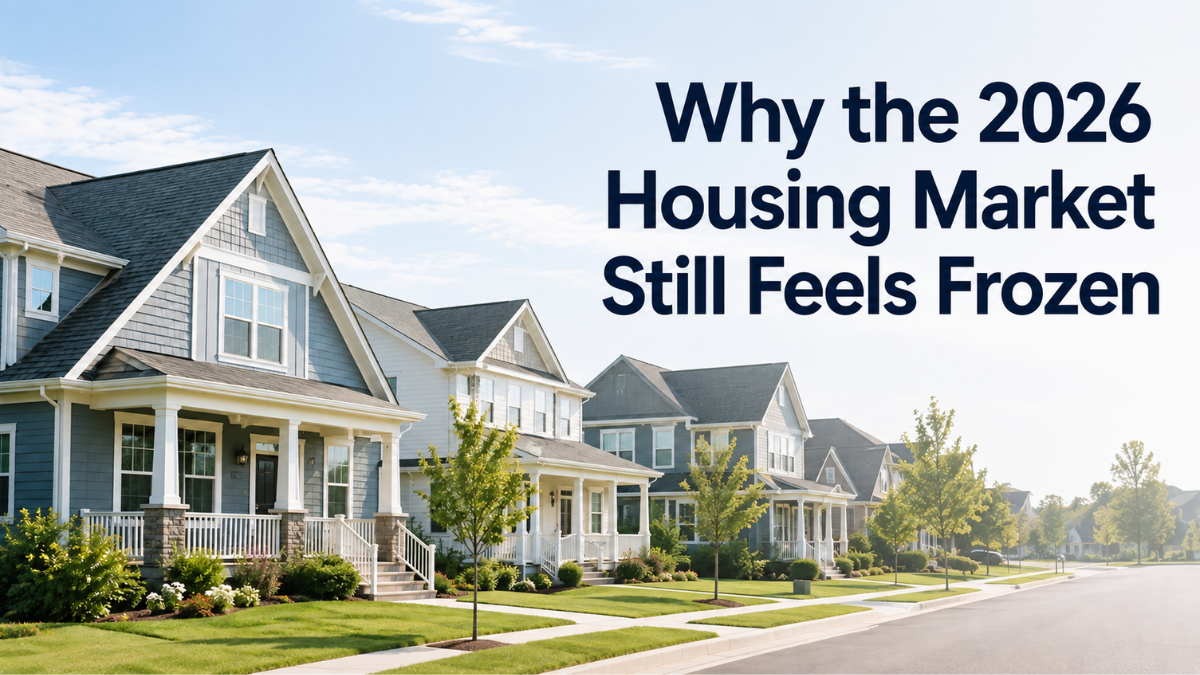
The U.S. housing market is sending mixed signals in 2026.
Affordability has improved by some measures. Home sales are slightly higher than they were a year ago. Mortgage rates eased during the second week of August.
Yet many buyers still feel priced out, existing homeowners remain reluctant to sell, and home prices continue to rise.
The latest numbers show why the housing market feels stuck even when individual indicators appear to be moving in the right direction.
Existing-home sales fell 1.7% in July to a seasonally adjusted annual rate of 4.06 million, according to the National Association of Realtors. Sales were still 0.7% higher than in July 2025, but the national median existing-home price increased 2% from a year earlier to $434,100.
For buyers waiting for a dramatic market reset, it has not arrived.
Mortgage Rates Remain the Main Constraint
The average U.S. 30-year fixed mortgage rate stood at 6.67% on August 13, according to Freddie Mac. That was slightly lower than 6.69% the week before, but higher than the 6.58% average recorded at the same point in 2025.
Small changes in mortgage rates can have a significant effect on monthly payments, particularly when home prices are already above $400,000 in many markets.
That creates a problem on both sides of a transaction.
Potential buyers face larger payments than they would under lower-rate conditions. Existing homeowners who secured mortgages below today’s rates may be reluctant to sell because moving could mean replacing an inexpensive loan with a much more expensive one.
Reuters noted that this rate lock-in effect continues to restrict the number of homes coming onto the market.
The result is unusual. Higher borrowing costs have weakened demand, but restricted supply has prevented prices from falling sharply across the country.
Inventory Has Not Solved the Problem
There were about 1.54 million existing homes available for sale in July, down 1.9% from June and 0.6% from July 2025.
At the July sales pace, that represented a 4.6-month supply of existing homes.
For buyers, the national inventory number only tells part of the story.
The shortage is especially painful at the more affordable end of the market. Reuters reported that weakness in July sales was concentrated among homes priced at $250,000 and below, while sales of properties priced at $750,000 and higher recorded double-digit growth.
That creates a divided market.
Higher-income households with substantial equity, strong earnings, or investment gains may still be able to purchase. Buyers trying to enter the market through lower-priced starter homes face a much tighter set of choices.
First-time buyers represented only 29% of existing-home purchases in July, down from 33% in June.
Affordability Is Improving, but Context Matters
There is some encouraging data.
NAR’s Housing Affordability Index reached 103.3 in July, compared with 98.3 a year earlier. Affordability improved year over year in all four major U.S. regions.
That improvement should not be confused with housing suddenly becoming inexpensive.
Affordability depends on several factors, including income, mortgage rates, and home prices. A household can be in a somewhat better position than it was last year while still facing a difficult buying environment.
The national median price has now increased year over year for 37 consecutive months, according to NAR.
That is why the experience of buyers may not match headlines suggesting that affordability is getting better.
The direction has improved. The starting point remains difficult.
There Is No Single National Housing Market
The latest data also show why national housing headlines can be misleading.
In July, existing-home sales increased 2% from the previous month in the Northeast but fell 2% in the Midwest and 3.1% in the South. Sales in the West were unchanged.
Prices differed even more.
The median existing-home price was $342,900 in the Midwest, $371,700 in the South, $563,800 in the Northeast, and $622,200 in the West. Year-over-year price growth ranged from just 0.2% in the West to 5.2% in the Northeast.
That means a buyer reading about a national slowdown could still be competing in a local market with limited listings and rising prices.
A seller hearing about record home values might live in a market where properties are taking longer to move.
Local inventory, employment, household formation, construction, insurance costs, taxes, and migration patterns can matter more to an individual transaction than the national average.
Buyers Are Watching Payments More Than Prices
For much of the previous housing cycle, buyers could focus heavily on the asking price.
The 2026 market makes the monthly payment equally important.
A modestly lower purchase price may not create much relief if mortgage rates rise. A slightly higher price can sometimes be easier to carry if financing conditions improve.
Freddie Mac noted on August 13 that purchase and refinance applications had responded to even modest changes in mortgage rates.
That sensitivity explains why housing activity can change quickly when bond markets and mortgage rates move.
People who are following the market should watch the relationship between prices, rates, available inventory, and local incomes rather than relying on a single national statistic.
Sellers Face a Different Decision
Homeowners are also dealing with a difficult calculation.
Selling a property may unlock years of accumulated equity, but buying another home can mean accepting a significantly higher mortgage rate than the seller currently has.
That helps explain why supply has remained constrained even though many homeowners have substantial equity.
For sellers who do enter the market, conditions are also becoming more balanced in some areas. NAR reported that the median property spent 29 days on the market in July, up from 28 days in June.
One extra day is not a major shift by itself, but the broader message is that sellers cannot assume every market still operates like the bidding-war years that followed the pandemic.
Pricing and local demand matter again.
What Could Change the Market
Mortgage rates remain the clearest variable to watch.
NAR Chief Economist Lawrence Yun said year-to-date existing-home sales were up 2.4% and argued that activity would be considerably stronger if average mortgage rates returned to around 6%.
That does not mean a move to 6% is guaranteed.
It shows how sensitive the current market has become to financing costs.
A meaningful decline in rates could bring more buyers back. It could also persuade some existing homeowners to list their properties, increasing supply.
If rates stay elevated while prices continue rising, the market may remain caught in the same pattern of restrained sales, limited inventory, and difficult entry conditions for first-time buyers.
A Market Moving Slowly Instead of Crashing
The 2026 housing market is not following a simple boom-or-bust story.
Home sales remain subdued, but they have not collapsed. Prices are still increasing nationally. Inventory is limited. Affordability measures have improved, but borrowing costs remain high enough to keep many households on the sidelines.
For buyers, sellers, investors, and real estate businesses, the lesson is to look beyond broad claims that the market is either “hot” or “cold.”
The better description is a market constrained by financing.
Until mortgage rates, home supply, or both change enough to loosen that constraint, U.S. housing may continue moving forward at a pace that feels frustratingly slow.
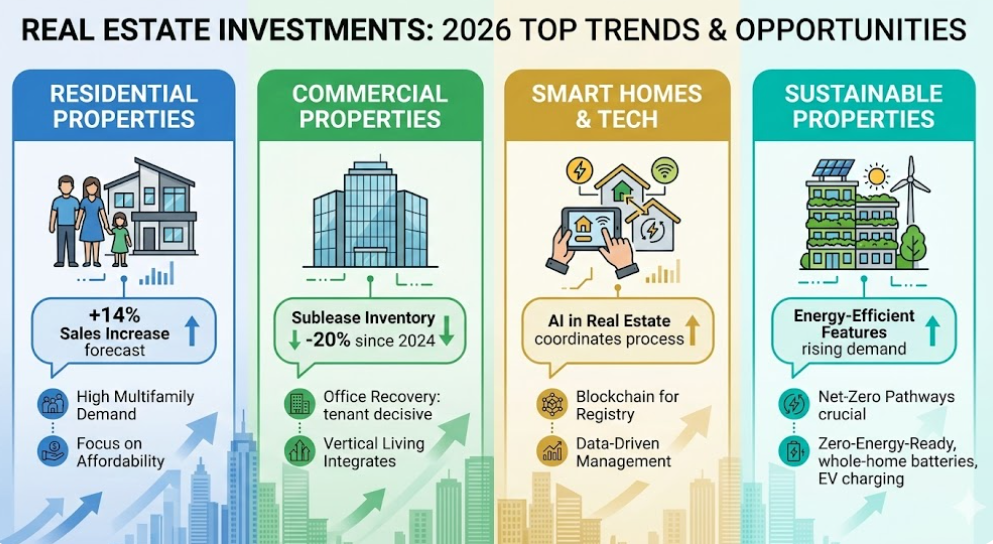
As we inch closer to 2026, the real estate market is primed for a seismic shift. With technology, sustainability, and evolving societal trends at the forefront, the next few years promise to redefine how we live, invest, and interact with properties. From the surge in smart home technology to the growing demand for eco-friendly buildings, the landscape of real estate is rapidly transforming. But what will it look like in 2026? Whether you’re a seasoned investor, a first-time homebuyer, or just an observer of the market’s pulse, understanding these trends is crucial. Here’s a closer look at the key forces that will shape the real estate market in the years to come.
Real Estate Market Trends to Watch in 2026
As we inch closer to 2026, the real estate market is primed for a seismic shift. With technology, sustainability, and evolving societal trends at the forefront, the next few years promise to redefine how we live, invest, and interact with properties. From the surge in smart home technology to the growing demand for eco-friendly buildings, the landscape of real estate is rapidly transforming. But what will it look like in 2026? Whether you’re a seasoned investor, a first-time homebuyer, or just an observer of the market’s pulse, understanding these trends is crucial. Here’s a closer look at the key forces that will shape the real estate market in the years to come.
Sustainability and Green Building Practices
The call for sustainability in real estate has never been louder. As environmental awareness grows, eco-friendly homes and green building practices are becoming more than just trends—they’re expected to be the norm by 2026. Here’s a breakdown of how sustainability is shaping the real estate market:
- Consumer Demand for Eco-Friendly Homes:
- Energy-efficient homes are no longer a luxury but a necessity for today’s homebuyers.
- Green homes are expected to increase in demand due to rising environmental consciousness.
- Key Features of Sustainable Homes:
- Solar Panels: More homes will feature solar energy systems as cost-effective, sustainable energy sources.
- Energy-Efficient Appliances: Homeowners will prioritize appliances that reduce energy consumption, including high-efficiency HVAC systems and smart thermostats.
- Sustainable Materials: Builders will focus on using sustainable materials such as recycled steel, bamboo, and low-VOC paints to reduce environmental impact.
- Government Incentives and Regulations:
- Governments are expected to offer more rebates and tax credits for sustainable development.
- Stricter building codes and regulations will ensure that new constructions adhere to higher environmental standards.
Urban vs. Suburban Real Estate Shifts
The real estate market in 2026 will continue to see a tug-of-war between urban and suburban living. Let’s explore the factors at play:
- Post-Pandemic Trends:
- The remote work revolution has made suburban areas more attractive, as people seek larger homes and more space for home offices.
- Affordable Housing: Suburbs offer more affordable housing options compared to congested urban areas.
- Urban Revitalization:
- Cities are transforming with mixed-use developments that combine residential, retail, and entertainment spaces.
- Urban areas will evolve to attract young professionals looking for convenience and community.
- Work-from-Home Impact:
- The continued rise of remote work means buyers will prioritize homes that accommodate home offices and outdoor spaces.
- There will be heightened demand for properties with flexible layouts, both in the suburbs and in urban areas.
Real Estate Investment Opportunities
Real estate remains a cornerstone of investment, but the landscape is changing. Here’s where savvy investors will be focusing in 2026:
- Emerging Real Estate Markets:
- Sun Belt Cities: Areas like Phoenix, Austin, and Tampa will see sustained growth due to migration trends and strong job markets.
- Secondary Markets: Smaller, emerging cities are poised for growth as people look to relocate from pricier metropolitan areas.
- Short-Term Rentals:
- Platforms like Airbnb will continue to shape the short-term rental market, with investors focusing on vacation homes and rental properties in popular destinations.
- Investment in vacation rental properties will increase as travelers prioritize unique, home-like experiences over traditional hotel stays.
- Commercial Real Estate Trends:
- Office Space: As remote work becomes permanent for many companies, the demand for traditional office space will decline.
- E-Commerce Growth: The rise in online shopping will lead to increased demand for warehouse spaces and logistics properties.
- Industrial Spaces: A surge in e-commerce and last-mile delivery will spur the growth of industrial real estate investments.
The Impact of Interest Rates and Financing
Fluctuating interest rates and evolving mortgage products will have a significant impact on the real estate market in 2026. Here’s how:
- Interest Rates:
- Higher Interest Rates could lead to decreased buyer purchasing power, affecting affordability and slowing down the pace of transactions.
- Low Interest Rates (if they remain favorable) will incentivize homebuyers and investors to act quickly, but potential rate hikes may curb demand.
- Mortgage Trends:
- More flexible mortgage products will emerge, offering homebuyers more options.
- Adjustable-rate mortgages (ARMs) may become more popular, allowing buyers to lock in lower initial rates.
- Affordability and Financing:
- The real estate market may become less accessible for first-time homebuyers, but government-backed programs could help bridge the gap.
- New lending structures will cater to the diverse financial needs of both buyers and investors, making it easier to secure financing.
What’s Next for Real Estate?
The trends shaping the real estate market in 2026 will have a profound and lasting impact on how we buy, sell, and invest in property. Let’s wrap it up:
- Adapting to the Green Revolution: Sustainable building practices will be the foundation of future real estate development.
- Shifting Preferences: Urban areas will continue to evolve, while suburban living will likely maintain its appeal for families and remote workers.
- Emerging Markets and Investment Opportunities: Investors will keep an eye on emerging real estate markets and short-term rental opportunities, while commercial spaces undergo a transformation.
- Interest Rates: Mortgage and interest rates will play a crucial role in determining the accessibility of real estate, pushing for more flexible financing solutions.
In 2026, real estate will be shaped by adaptability and innovation. Whether you’re looking to buy, sell, or invest, staying ahead of these trends will be essential. With sustainability, technology, and evolving market dynamics at the forefront, the real estate landscape of 2026 will offer plenty of opportunities for those who are prepared.
Ready for the Future of Real Estate?
The real estate market in 2026 is set to undergo transformative shifts that will impact how we live and invest for years to come. As sustainability, technology, and changing social dynamics become the driving forces, those who stay informed and agile will be best positioned to succeed. Whether you’re a homebuyer looking for the perfect green home, an investor eyeing emerging markets, or a developer navigating the evolving demands of urban and suburban living, 2026 promises to be a pivotal year.
Prepare now, adapt to the trends, and position yourself for success in this exciting new real estate era.
-

 Leadership2 years ago
20 Entrepreneurs to Watch Closeout 2024
-
 Real Estate2 years ago
Startups Are Looking To Fractionalize Real Estate Assets, But Should They? – Forbes
-

 Innovation3 years ago
Leo Horacio: A Successful Entrepreneur in the Ecommerce and Online Sales Industry
-

 Music2 years ago
Artist Deydee Signs $350,000 Contract with Rueda Empire LLC
-

 Innovation2 years ago
Innovators in Social-Emotional Learning: Dr. Myava Clark and Chris Clark Jr.
-

 Latest2 years ago
Florida Gov DeSantis signs 15-week abortion ban | Latest News
-

 Money2 years ago
Trailblazer in Business: Alicia Fitts on Building Wealth and Community Through Faith
-

 Latest2 years ago
Charles zhang recognized by forbes as #1 on michigan’s 2022 best in state wealth advisor list