
Leadership
Healing With Purpose How Eva Bryant Is Redefining Mental Wellness for the Culture


Eva Bryant LMHC NCC QS is a Haitian American clinician speaker and mental health leader based in Miami Florida whose work sits at the intersection of clinical excellence, cultural humility and community empowerment. With more than a decade of experience in the mental health field Eva has dedicated her career to making therapy approachable, relevant and transformative particularly for communities that have historically faced barriers to care.
She earned her undergraduate degree from Florida Agricultural and Mechanical University and her graduate degree from Nova Southeastern University. Eva is currently pursuing her PhD in Counseling with a specialization in Marital Couple and Family Counseling at Barry University further deepening her expertise in relational and systemic healing. Her academic and professional journey reflects a lifelong commitment to understanding how relationships, culture and identity shape emotional wellbeing.
Eva is the Founder and CEO of Therapy With a Purpose a private practice where she provides individual couples family and group therapy. In addition to direct clinical services she serves as a Qualified Supervisor mentoring and training emerging clinicians as they navigate licensure professional identity development and ethical practice. Through supervision Eva extends her impact beyond her own clients by shaping the next generation of culturally responsive mental health professionals.
She is also the creator of Diva In Session, a mental health and wellness initiative designed to normalize therapy conversations and expand access to healing tools within marginalized communities. Diva In Session blends education storytelling and culturally affirming practices to help individuals see mental wellness as both attainable and sustainable. Eva’s work is grounded in the belief that healing is not only personal but communal and that wellness must be integrated into everyday life not confined to the therapy room.
Her leadership and impact have been recognized by Voyage Miami Magazine Teen Court Miami and MIA Legacy’s Most Powerful and Influential Black Business Leaders of 2025. Whether she is speaking supervising or creating wellness resources Eva remains focused on one core mission helping individuals and communities heal from the inside out with intention, purpose and compassion.
From Conversation to Embodied Healing What’s New With Your Business
Within the last three months Diva In Session has evolved in an exciting and meaningful way by expanding beyond dialogue and education into tangible everyday wellness tools. While conversation has always been central to the brand’s mission of normalizing therapy and mental health discussions, this new chapter reflects a deeper commitment to embodiment and daily practice. The introduction of affirmation headbands and guided journal prompts marks a shift toward helping individuals integrate healing into their routines in visible practical ways.
These offerings were intentionally created to support mindful self talk, self worth and daily reflection. The affirmation headbands serve as wearable reminders that healing is not something you schedule once a week but something you live and practice consistently. They are designed to be culturally relevant, affirming and accessible meeting people where they are rather than requiring them to meet unrealistic standards of wellness. Similarly the guided journal prompts encourage users to slow down, reflect with intention and develop a deeper relationship with themselves through writing.
What makes this expansion especially meaningful is that it aligns with Diva In Session’s core philosophy: healing should be both accessible and embodied. Mental health is not only about insight it is about action repetition and compassion toward oneself. These tools help bridge the gap between awareness and practice allowing individuals to carry therapeutic principles into their everyday lives.
This evolution also reflects a broader vision for Diva In Session as a wellness ecosystem rather than a single platform. By offering tools that support mindfulness affirmation and reflection the brand continues to expand its impact while remaining rooted in cultural understanding and authenticity. This phase represents growth not just in products but in purpose reinforcing the belief that healing can be intentional affirming and woven into daily life.
What’s Ahead Upcoming Projects and What to Expect Next
Over the next few months Diva In Session is focused on thoughtful intentional expansion that deepens its impact while staying aligned with its mission of generational and community centered wellness. Building on the launch of affirmation headbands and guided journal prompts the brand will continue developing wellness offerings that encourage intentional healing, self reflection and self worth. These tools are being designed not as quick fixes but as sustainable practices that individuals can return to again and again.
In addition to physical wellness tools Diva In Session is actively developing new content and community centered initiatives aimed at fostering deeper engagement and collective healing. This includes educational resources, reflective prompts and experiences that speak directly to the lived realities of marginalized communities. The focus remains on normalizing therapy, dismantling stigma and helping individuals understand that wellness is not a luxury, it is a necessity.
A key emphasis moving forward is generational wellness. Diva In Session is exploring ways to support individuals in understanding how patterns, beliefs and emotional habits are passed down while also offering tools to interrupt cycles that no longer serve them. This approach encourages people to view healing not only as a personal journey but as an act of responsibility and care for future generations.
All upcoming launches updates and initiatives will be shared through the official Diva In Session platform. Those interested in staying connected learning more about new offerings or engaging with the growing community can visit www.divainsession.com for the most up to date information. This next chapter is rooted in growth alignment and intention continuing the work of making healing accessible, affirming and sustainable.
Contact Information
Email: divainsession@gmail.com
Website: www.divainsession.com
Facebook www.facebook.com/divainsession
Instagram @iamdivainsession
LinkedIn www.linkedin.com/eva-bryant-lmhc-ncc-qs


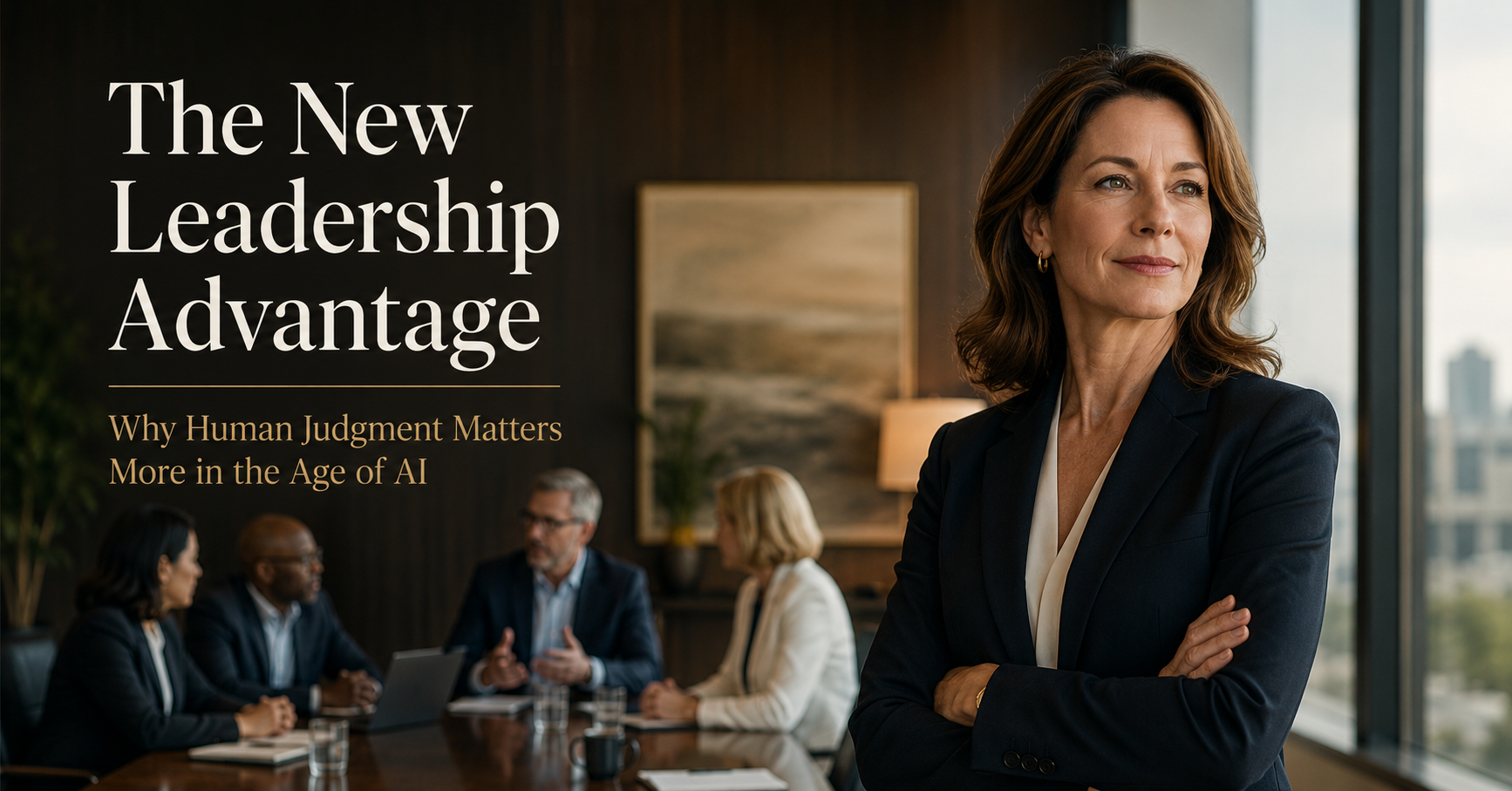
Artificial intelligence is changing more than the way companies work. It is changing what companies expect from their leaders.
For years, leadership was often associated with expertise. The person who knew the most, had the most experience, or could solve the hardest problem naturally moved into a position of authority.
In 2026, that model is being challenged.
AI can now analyze information, generate reports, summarize meetings, assist with strategy, write code, automate administrative work, and support increasingly complex business decisions. According to the World Economic Forum, roughly a third of workplace tasks are already automated, while organizations are placing greater value on distinctly human capabilities such as judgment, communication, empathy, and problem identification.
The strongest leaders of the next decade may therefore not be the people with all the answers.
They may be the people who know how to ask the right questions.
Leadership Is Moving From Expertise to Orchestration
AI does not eliminate the need for leaders. It changes their role.
A modern leader increasingly manages a combination of people, technology, automated systems, outside partners, and AI tools. Instead of personally controlling every decision, leaders must determine which decisions can be delegated, which require human judgment, and where technology needs stronger oversight.
This creates a new kind of leadership challenge.
Efficiency is relatively easy to measure. Trust is not.
An AI system may help a company finish a process faster, but employees still need someone who can explain why that process is changing, what the change means for their careers, and how they fit into the organization’s future.
That responsibility belongs to leadership.
Research highlighted by the World Economic Forum shows that 97% of HR leaders surveyed believe human-centered skills are more important in the AI era, while 64% say identifying new problems is becoming more valuable than simply solving existing ones.
That is an important distinction.
When technology becomes better at solving known problems, human advantage increasingly comes from recognizing opportunities and risks that technology has not yet been asked to examine.
Employees Need Direction, Not Just Technology
Companies around the world are investing heavily in AI, but buying technology is not the same as transforming an organization.
Employees are being asked to learn new systems while simultaneously wondering how automation could change their responsibilities.
This makes clarity one of the most valuable leadership skills in 2026.
People need to understand where the organization is going, why changes are happening, and what skills will help them remain valuable.
Recent workforce research points to skills gaps as one of the defining challenges facing organizations as AI adoption accelerates. Companies are increasingly focusing on reskilling, redesigning roles, improving internal mobility, and building more adaptable workforce structures.
Leaders who simply announce new technology may create uncertainty.
Leaders who connect technology with opportunity can create momentum.
The Best Leaders Will Build Future Leaders
There is another challenge developing quietly inside the AI economy.
Many entry-level tasks traditionally helped younger employees build judgment and experience. Preparing reports, performing basic analysis, handling administrative work, and solving smaller operational problems created opportunities to learn how businesses function.
AI is beginning to automate some of those tasks.
That creates efficiency today but could create a leadership-development problem tomorrow.
The World Economic Forum has warned that organizations need to rethink how younger workers gain the practical experience that traditionally prepared them for management.
Companies cannot assume leadership talent will develop automatically.
Managers will need to deliberately give employees opportunities to make decisions, evaluate AI-generated work, communicate with customers, manage uncertainty, and take responsibility for outcomes.
In other words, organizations must automate tasks without accidentally automating away the experiences that develop good leaders.
Trust Will Become a Competitive Advantage
Technology moves quickly. Human confidence usually moves more slowly.
That gap matters.
Organizations with strong leadership cultures will be able to introduce new technologies without creating unnecessary fear or confusion. Employees are more likely to experiment, learn, and adapt when leaders communicate openly about both opportunities and risks.
This does not mean leaders need to have complete certainty.
In fact, modern leadership increasingly requires being comfortable saying, “We don’t know yet, but here is how we are going to find out.”
That type of transparency can be more powerful than pretending to have perfect answers in an environment that changes every month.
The Leader of the Future Is an Enabler
The AI era is not reducing the importance of leadership.
It is exposing the difference between authority and leadership.
Authority can tell people what to do.
Leadership helps people understand where they are going.
As technology becomes more capable, the qualities that make human leaders valuable become clearer: judgment, curiosity, courage, empathy, communication, accountability, and the ability to create direction when certainty is unavailable.
The organizations that succeed will not simply have the most advanced AI.
They will have leaders who know how to combine advanced technology with capable, confident people.
That may become the defining leadership advantage of the AI age.
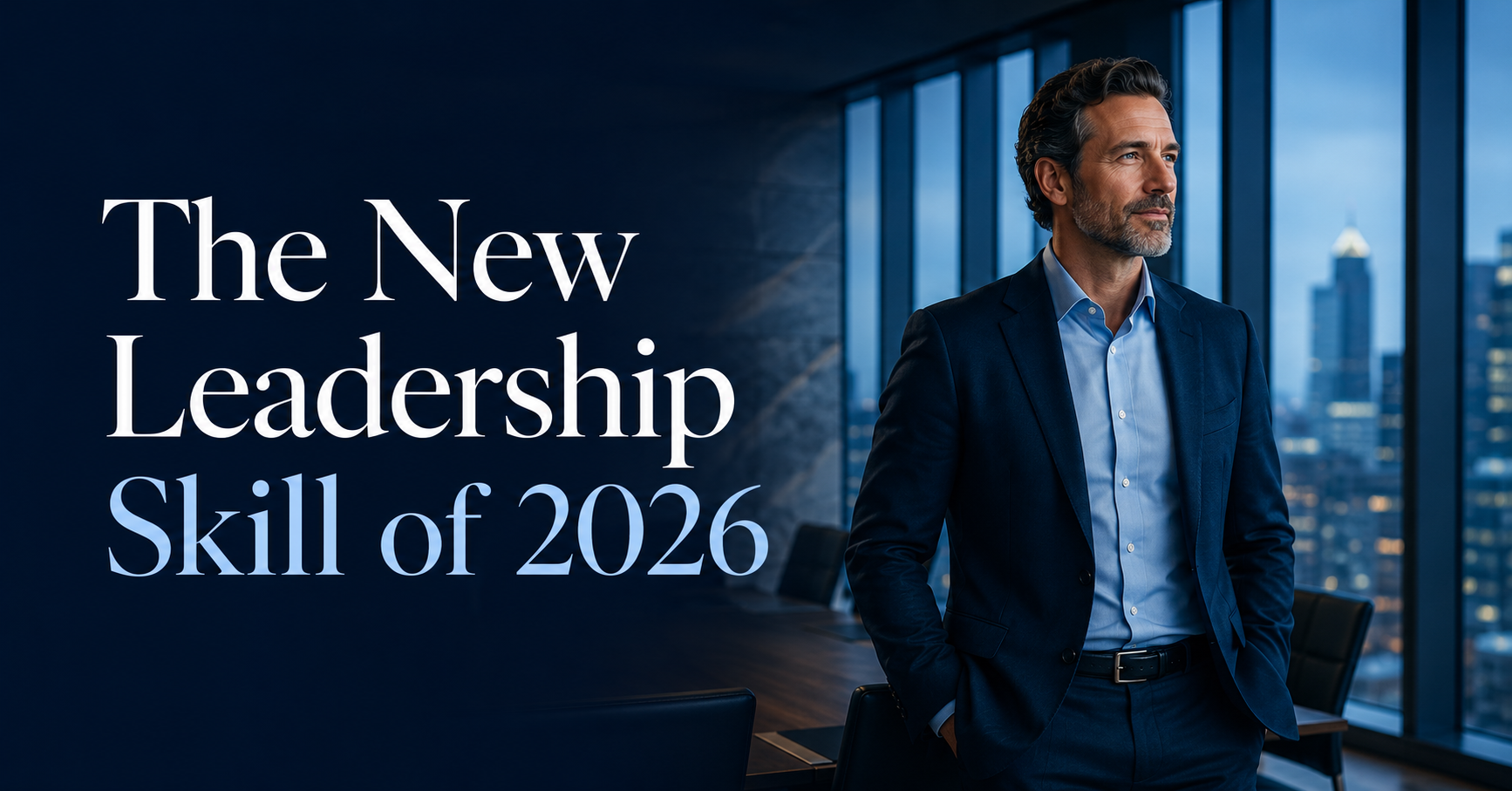
Artificial intelligence is no longer simply changing how companies work. It is changing what companies need from their leaders.
In 2026, the question is no longer whether businesses should use AI. The bigger question is whether leaders know how to lead in an AI-powered workplace without losing the human qualities that make organizations successful.
Recent developments across the business world make this shift clear.
Google recently reorganized leadership within its DeepMind AI division as competition among major artificial intelligence companies continues to accelerate. The changes included a new leadership structure, shifting teams and a stronger push toward commercializing its Gemini technology.
At the same time, companies around the world are searching for more workers with AI-related skills. In the United Kingdom, AI or related tools appeared in 9.4% of job postings by the end of June 2026—a record high—even as overall job postings declined.
These developments point to something bigger than a technology trend.
AI has become a leadership issue.
Leaders Can No Longer Delegate AI to the Technology Department
For years, major technology decisions could be handed to the IT department.
That approach will not work with AI.
Artificial intelligence can now influence marketing, customer service, hiring, research, operations, sales, content creation and strategic planning.
That means the CEO, founder or department leader must understand enough about AI to make decisions about how it should be used.
Leaders do not necessarily need to become programmers. They do, however, need to understand what the technology can do, what it cannot do and where using it creates the most value.
The companies that succeed may not be the companies with the most AI tools.
They may simply be the companies whose leaders know how to use those tools more intentionally.
Speed Is Becoming a Competitive Advantage
One lesson coming from today’s AI race is that large organizations can have enormous resources and still struggle when decision-making becomes too slow.
Reuters reported that structural challenges, disagreements over resources and bureaucracy were among the issues cited by sources familiar with Google’s AI efforts.
That lesson applies far beyond technology companies.
Organizations must be able to test ideas, review results and make changes faster than they have in the past.
A leader who takes six months to make a decision about something competitors are testing this week could quickly find the company behind.
This does not mean making reckless decisions.
It means creating a culture where responsible experimentation is encouraged.
The Human Side of Leadership Is Becoming More Valuable
There is an interesting paradox happening.
As machines become better at performing tasks, the skills that make us uniquely human may become even more valuable.
AI can create a report.
It cannot replace trust.
AI can analyze customer data.
It cannot build genuine relationships.
AI can recommend a strategy.
It cannot take responsibility for the consequences of that strategy.
Strong leaders will need emotional intelligence, communication skills, judgment, creativity and the ability to bring people together around a common vision.
Technology can support leadership. It cannot replace leadership.
Leaders Must Decide What Should Remain Human
One of the most important questions executives should ask is simple:
Just because we can automate something, should we?
Companies should consider the customer experience before replacing every human interaction with automation.
The same applies internally.
A difficult employee conversation probably should not become an automated email.
A major client experiencing a problem may need a person rather than a chatbot.
A team facing major organizational changes needs leadership, communication and reassurance.
The winning organizations will likely create the right combination of technological efficiency and human connection.
Training Matters More Than Buying Another Tool
Businesses are already experiencing benefits from AI, but implementation remains uneven.
A 2026 Goldman Sachs survey found that 76% of participating small businesses reported using AI. Among those using it, 93% reported a positive impact and 84% pointed to increased efficiency and productivity as the main benefit. Yet only 14% said AI was fully integrated into their core operations, while 73% said additional training and implementation resources would help.
That gap is important.
Buying technology does not automatically create transformation.
Companies must teach people how to use it.
Leaders should create clear guidelines, provide training and identify practical ways AI can improve existing workflows.
The Leaders Who Win Will Be Adaptable
Every major technology shift creates winners and losers.
The difference is often not the technology itself.
It is how quickly people adapt to it.
The leaders who thrive in this next era will not necessarily be the people who know the most about artificial intelligence.
They will be the people who remain curious enough to learn, confident enough to change and disciplined enough to know where technology belongs—and where human leadership still matters most.
Because in an increasingly automated world, leadership may become more human, not less.

Not long ago, artificial intelligence lived quietly in the background—powering search engines, automating reports, and optimizing supply chains. Today, it sits beside employees as a daily coworker, drafting ideas, analyzing strategy, and influencing decisions in real time. This shift marks more than a technological upgrade; it represents a fundamental rewrite of leadership itself. Managers are no longer leading teams composed solely of people—they are guiding hybrid workforces where human judgment intersects with machine intelligence. As AI moves from tool to collaborator, leadership is being redefined in ways many organizations are only beginning to understand. The question facing executives is no longer whether AI will change work, but whether leaders are prepared to change with it.
From Managing People to Managing Human–AI Collaboration
Gone are the days when leadership was solely about managing people and processes. The rise of AI has shifted the role of leaders from controllers to orchestrators. Now, leaders must harmonize human creativity with AI’s efficiency, leveraging data-driven decision-support systems.
Key challenges for leaders in this new model:
- Determining who does what: What should humans handle? What is best left to AI?
- Shifting focus from control to orchestration, blending human ingenuity with machine precision.
- Designing workflows that optimize both human and machine strengths.
Leadership is no longer about directing a single workforce—it’s about managing a dynamic collaboration between humans and machines.
Decision-Making in the Age of AI Assistance
In an AI-augmented workplace, leaders are not just relying on instinct or experience to make decisions—they’re now balancing intuition with algorithmic insights. With AI providing instantaneous data-driven recommendations, the temptation to follow these outputs blindly is strong. However, the challenge for leaders is to not simply trust AI but to question it, challenge it, and understand its limitations.
New leadership responsibilities include:
- Questioning AI outputs and ensuring they align with organizational goals.
- Balancing intuition with AI insights to make informed decisions.
- Maintaining critical thinking and not blindly relying on AI’s recommendations.
AI can assist, but leaders remain responsible for the final call.
Emotional Intelligence Becomes More Important, Not Less
As AI takes on more analytical tasks, the need for emotional intelligence in leadership only grows. Machines may excel at crunching numbers, but they lack empathy, understanding, and the ability to motivate human teams. Leaders must step up as emotional anchors, providing communication, trust, and psychological safety in a rapidly changing work environment.
Key emotional intelligence skills leaders need:
- Communication to clarify AI’s role and manage expectations.
- Trust-building to reduce employee concerns about AI.
- Psychological safety to create an environment where employees feel valued, not threatened.
- Conflict resolution to address concerns over AI integration and potential job displacement.
Strong leadership in this new AI-augmented world is defined not by technical know-how but by the ability to connect with and support people through technological change.
Redefining Skills and Talent Development
AI’s rise demands a shift in how leaders approach talent development. It’s no longer enough to focus solely on traditional skills. Leaders must foster AI literacy, adaptability, and creative problem-solving across their teams.
Areas leaders should focus on for skill development:
- AI literacy to ensure employees are comfortable working with AI tools.
- Adaptability to respond to ever-changing technological advancements.
- Creative problem-solving to encourage employees to think beyond AI’s capabilities.
- Continuous learning to keep teams evolving as new tools and technologies emerge.
Leaders must cultivate evolving capabilities, coaching their teams to leverage AI while honing skills that machines cannot replicate. The role of leadership shifts from being a manager to being a coach and capability builder.
Ethics, Trust, and Responsible AI Leadership
As AI becomes more integrated into the workplace, it also brings new ethical challenges. Bias in algorithms, privacy concerns, and the risk of over-automation are just a few of the issues leaders must address.
Ethical responsibilities for leaders:
- Establishing guidelines for AI usage to ensure fairness and transparency.
- Ensuring data privacy and protecting employee/customer information.
- Addressing biases in AI algorithms to prevent unintended discrimination.
- Building trust by being transparent about AI’s role in decision-making.
Ethical leadership isn’t just about protecting privacy or avoiding discrimination—it’s about creating a culture of trust, where AI is used to enhance human capabilities rather than diminish them.
The Leader as a Learning Partner with AI
In this new landscape, leaders are no longer the all-knowing authorities they once were. Instead, they must embrace a mindset of continuous learning, staying ahead of the curve by becoming proficient in AI tools themselves.
Shifting leadership responsibilities include:
- Learning AI tools to understand their potential and limitations.
- Modeling curiosity and an eagerness to experiment with new technologies.
- Fostering a culture of collaboration between AI and human expertise.
- Helping teams adapt to AI as a thinking partner, not just a tool to be controlled.
Leaders who adapt to this new dynamic will thrive by fostering an environment of mutual learning between AI and their teams.
Leadership in the AI-Augmented Future
The future of leadership is one where human intuition and AI-driven insights work side by side. As AI becomes an indispensable part of the daily workflow, leaders must evolve from traditional management models to ones that prioritize collaboration, ethical decision-making, and continuous learning. Success in this new era will depend on a leader’s ability to blend technological awareness with emotional intelligence, all while guiding teams through the complexities of an AI-augmented workplace. Leaders who embrace this shift, balancing human understanding with data-driven strategies, will not only survive—they will thrive in the AI-powered future.
-

 Leadership2 years ago
20 Entrepreneurs to Watch Closeout 2024
-

 Real Estate2 years ago
Startups Are Looking To Fractionalize Real Estate Assets, But Should They? – Forbes
-

 Innovation3 years ago
Leo Horacio: A Successful Entrepreneur in the Ecommerce and Online Sales Industry
-

 Innovation2 years ago
Innovators in Social-Emotional Learning: Dr. Myava Clark and Chris Clark Jr.
-

 Music2 years ago
Artist Deydee Signs $350,000 Contract with Rueda Empire LLC
-

 Latest2 years ago
Florida Gov DeSantis signs 15-week abortion ban | Latest News
-

 Money2 years ago
Trailblazer in Business: Alicia Fitts on Building Wealth and Community Through Faith
-

 Latest2 years ago
Charles zhang recognized by forbes as #1 on michigan’s 2022 best in state wealth advisor list