
Leadership
Bridging the Wealth Gap Through Government Contracts: The Vision of Dr. Karwanna D. Irving


Dr. Karwanna D. Irving is a transformational speaker, author, and nationally recognized business coach who has built her career on helping six-figure entrepreneurs scale to seven figures by leveraging one of the most powerful yet underutilized revenue streams available: government contracts. With more than twenty years of experience spanning entrepreneurship, leadership development, and strategic growth, Dr. Irving has positioned herself as a trusted authority in teaching business owners how to successfully sell to the world’s largest buyer, the U.S. government.
Throughout her career, Dr. Irving has empowered more than7,000 entrepreneurs, executives, and business leaders to move beyond traditional income ceilings and step into sustainable, scalable growth. Her approach combines strategic clarity, practical execution, and mindset transformation, allowing her clients to confidently pursue lucrative public sector opportunities without sacrificing their vision or values. Known for translating complex government contracting processes into clear, actionable steps, she has helped countless businesses expand their reach, increase profitability, and create long-term financial stability.
Dr. Irving’s impact and leadership have been widely recognized. She is a recipient of the 2024 Stevie Awards in Business and the prestigious 2025 Enterprising Woman Award, honoring her influence as both a business strategist and a champion for economic equity. Her work has been featured in Success Magazine, and the San Francisco Business Times named her firm among the Top 100 Fastest Growing Bay Area Private Companies. Further solidifying her standing as an industry leader, Dr. Irving’s company ranked #1680 on the Inc. 5000 list of 2025 Fastest Growing Private Companies in America.
Beyond accolades, Dr. Irving is deeply committed to bridging the wealth gap by equipping six-figure business owners with the knowledge and confidence needed to unlock multi-million-dollar opportunities. She believes access to government contracts can be transformative not only for individual entrepreneurs, but for families, communities, and future generations. Through speaking engagements, coaching programs, and educational challenges, Dr. Irving continues to inspire business owners to think bigger, execute smarter, and build enterprises that create lasting impact.
Special thanks to Dr. Karwanna’s Sponsor
San Francisco African American Chamber of Commerce
Website: www.sfaacc.org
What’s New: Major Momentum and Opportunities Emerging in the Last Three Months
Over the past three months, the momentum within my business has been nothing short of incredible, and I am excited about the opportunities we are now opening for business owners at a higher level. One of the most significant developments is the re-launch of our five-day challenge designed specifically to help business owners, entrepreneurs, and high-level executives add an additional six to seven figures by securing lucrative government contracts. This initiative was created in response to the growing demand from entrepreneurs who are ready to scale but are hitting a ceiling in the private sector.
What makes this challenge different is its focus on real strategies, real opportunities, and real execution. Participants are not just learning theory. They are gaining clarity on how government agencies buy, how to position their businesses correctly, and how to confidently pursue contracts that align with their existing services. In a time when many businesses are experiencing uncertainty in traditional markets, government contracting offers stability, consistency, and long-term growth, and this challenge meets business owners exactly where they are.
Another exciting development is the expansion of our educational framework to support more advanced entrepreneurs who are already earning six figures and want to transition into seven-figure government opportunities. We are seeing an increase in executives and established founders who recognize that government contracts are not just an add-on but a strategic growth pillar. This evolution reflects our commitment to meeting our community at every stage of growth while continuing to elevate the conversation around wealth creation, access, and sustainability.
For those ready to take advantage of these opportunities, the upcoming five-day challenge is the perfect entry point. Business owners can learn more and secure their spot by visiting ContractsToMillions.com, where the next level of scaling begins.
Looking Ahead: What’s Coming in the Next Few Months
In the coming months, my focus remains on expanding access to education, strategy, and execution around government contracting at scale. The centerpiece of this effort is our upcoming five-day challenge, which will serve as both an intensive learning experience and a catalyst for long-term growth. This challenge is designed for business owners, entrepreneurs, and high-level executives who are serious about adding six to seven figures in revenue and are ready to move with intention.
During the challenge, participants will gain insight into how government agencies source vendors, how to align their current offerings with public sector demand, and how to build credibility quickly in a highly competitive space. We will also address mindset barriers that often prevent entrepreneurs from pursuing government contracts, such as fear, misinformation, or the belief that these opportunities are out of reach. My goal is to demystify the process and empower participants with clarity and confidence.
Beyond the challenge itself, this initiative sets the stage for deeper engagement and continued support for those ready to fully integrate government contracting into their business model. The upcoming months will also include expanded resources, strategic partnerships, and advanced training opportunities designed to help entrepreneurs move from learning to implementation without unnecessary delays.
For anyone who knows they are capable of more and is ready to pursue stable, scalable revenue, now is the time. The upcoming five-day challenge provides a powerful starting point for transforming how business owners think about growth and opportunity. More details and registration information can be found at ContractsToMillions.com.
Contact Information
- Email: karwanna1@gmail.com
- Website: www.ShesGotGoals.com
- Facebook: https://facebook.com/IAMKARWANNAD
- Instagram: @karwannadspeaks
- LinkedIn: https://linkedin.com/in/karwannadspeaks/


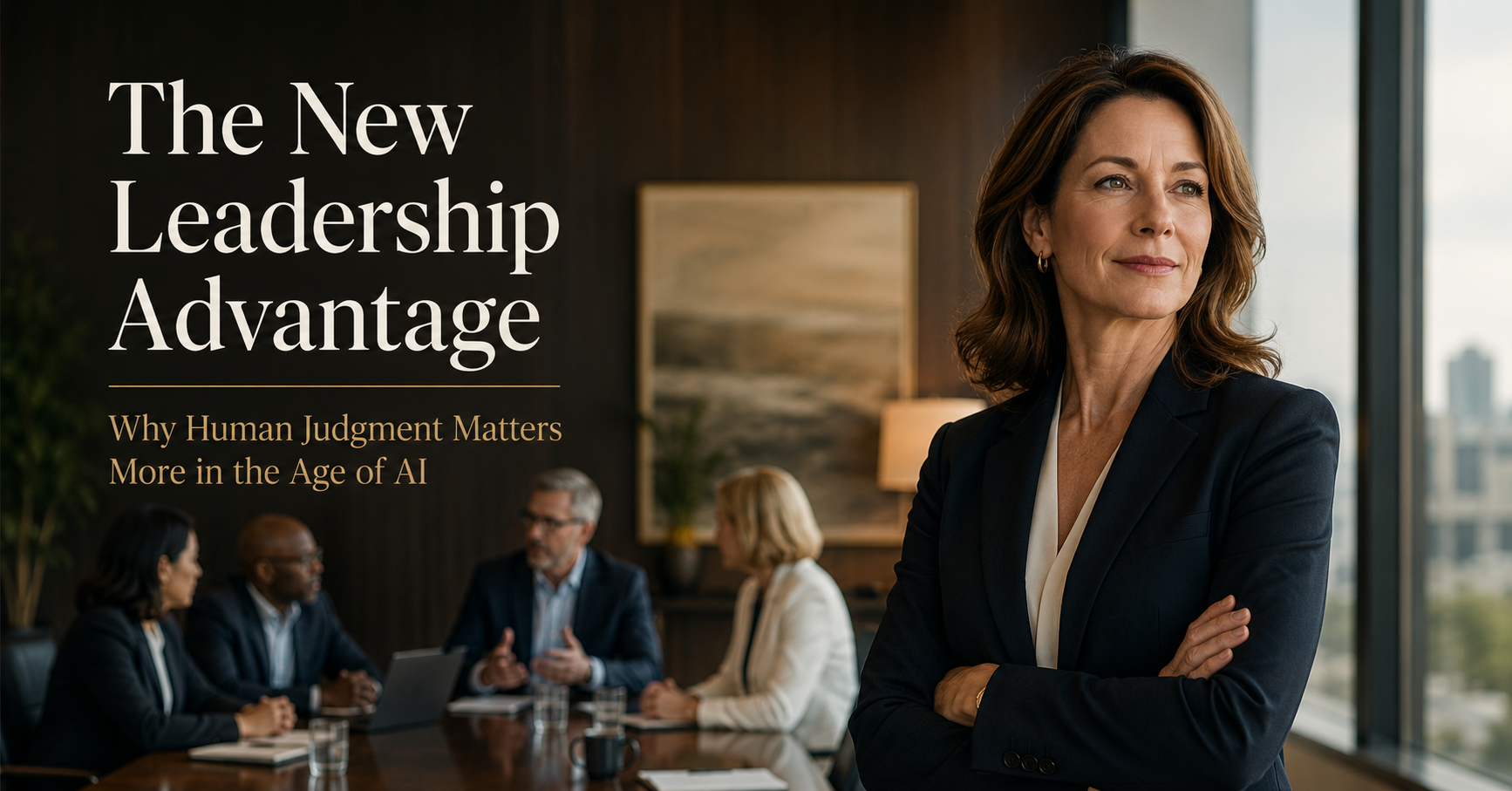
Artificial intelligence is changing more than the way companies work. It is changing what companies expect from their leaders.
For years, leadership was often associated with expertise. The person who knew the most, had the most experience, or could solve the hardest problem naturally moved into a position of authority.
In 2026, that model is being challenged.
AI can now analyze information, generate reports, summarize meetings, assist with strategy, write code, automate administrative work, and support increasingly complex business decisions. According to the World Economic Forum, roughly a third of workplace tasks are already automated, while organizations are placing greater value on distinctly human capabilities such as judgment, communication, empathy, and problem identification.
The strongest leaders of the next decade may therefore not be the people with all the answers.
They may be the people who know how to ask the right questions.
Leadership Is Moving From Expertise to Orchestration
AI does not eliminate the need for leaders. It changes their role.
A modern leader increasingly manages a combination of people, technology, automated systems, outside partners, and AI tools. Instead of personally controlling every decision, leaders must determine which decisions can be delegated, which require human judgment, and where technology needs stronger oversight.
This creates a new kind of leadership challenge.
Efficiency is relatively easy to measure. Trust is not.
An AI system may help a company finish a process faster, but employees still need someone who can explain why that process is changing, what the change means for their careers, and how they fit into the organization’s future.
That responsibility belongs to leadership.
Research highlighted by the World Economic Forum shows that 97% of HR leaders surveyed believe human-centered skills are more important in the AI era, while 64% say identifying new problems is becoming more valuable than simply solving existing ones.
That is an important distinction.
When technology becomes better at solving known problems, human advantage increasingly comes from recognizing opportunities and risks that technology has not yet been asked to examine.
Employees Need Direction, Not Just Technology
Companies around the world are investing heavily in AI, but buying technology is not the same as transforming an organization.
Employees are being asked to learn new systems while simultaneously wondering how automation could change their responsibilities.
This makes clarity one of the most valuable leadership skills in 2026.
People need to understand where the organization is going, why changes are happening, and what skills will help them remain valuable.
Recent workforce research points to skills gaps as one of the defining challenges facing organizations as AI adoption accelerates. Companies are increasingly focusing on reskilling, redesigning roles, improving internal mobility, and building more adaptable workforce structures.
Leaders who simply announce new technology may create uncertainty.
Leaders who connect technology with opportunity can create momentum.
The Best Leaders Will Build Future Leaders
There is another challenge developing quietly inside the AI economy.
Many entry-level tasks traditionally helped younger employees build judgment and experience. Preparing reports, performing basic analysis, handling administrative work, and solving smaller operational problems created opportunities to learn how businesses function.
AI is beginning to automate some of those tasks.
That creates efficiency today but could create a leadership-development problem tomorrow.
The World Economic Forum has warned that organizations need to rethink how younger workers gain the practical experience that traditionally prepared them for management.
Companies cannot assume leadership talent will develop automatically.
Managers will need to deliberately give employees opportunities to make decisions, evaluate AI-generated work, communicate with customers, manage uncertainty, and take responsibility for outcomes.
In other words, organizations must automate tasks without accidentally automating away the experiences that develop good leaders.
Trust Will Become a Competitive Advantage
Technology moves quickly. Human confidence usually moves more slowly.
That gap matters.
Organizations with strong leadership cultures will be able to introduce new technologies without creating unnecessary fear or confusion. Employees are more likely to experiment, learn, and adapt when leaders communicate openly about both opportunities and risks.
This does not mean leaders need to have complete certainty.
In fact, modern leadership increasingly requires being comfortable saying, “We don’t know yet, but here is how we are going to find out.”
That type of transparency can be more powerful than pretending to have perfect answers in an environment that changes every month.
The Leader of the Future Is an Enabler
The AI era is not reducing the importance of leadership.
It is exposing the difference between authority and leadership.
Authority can tell people what to do.
Leadership helps people understand where they are going.
As technology becomes more capable, the qualities that make human leaders valuable become clearer: judgment, curiosity, courage, empathy, communication, accountability, and the ability to create direction when certainty is unavailable.
The organizations that succeed will not simply have the most advanced AI.
They will have leaders who know how to combine advanced technology with capable, confident people.
That may become the defining leadership advantage of the AI age.
Leadership
From Book to Booked: Taurea Avant Shares How Authors Can Use AI to Land More Speaking Opportunities
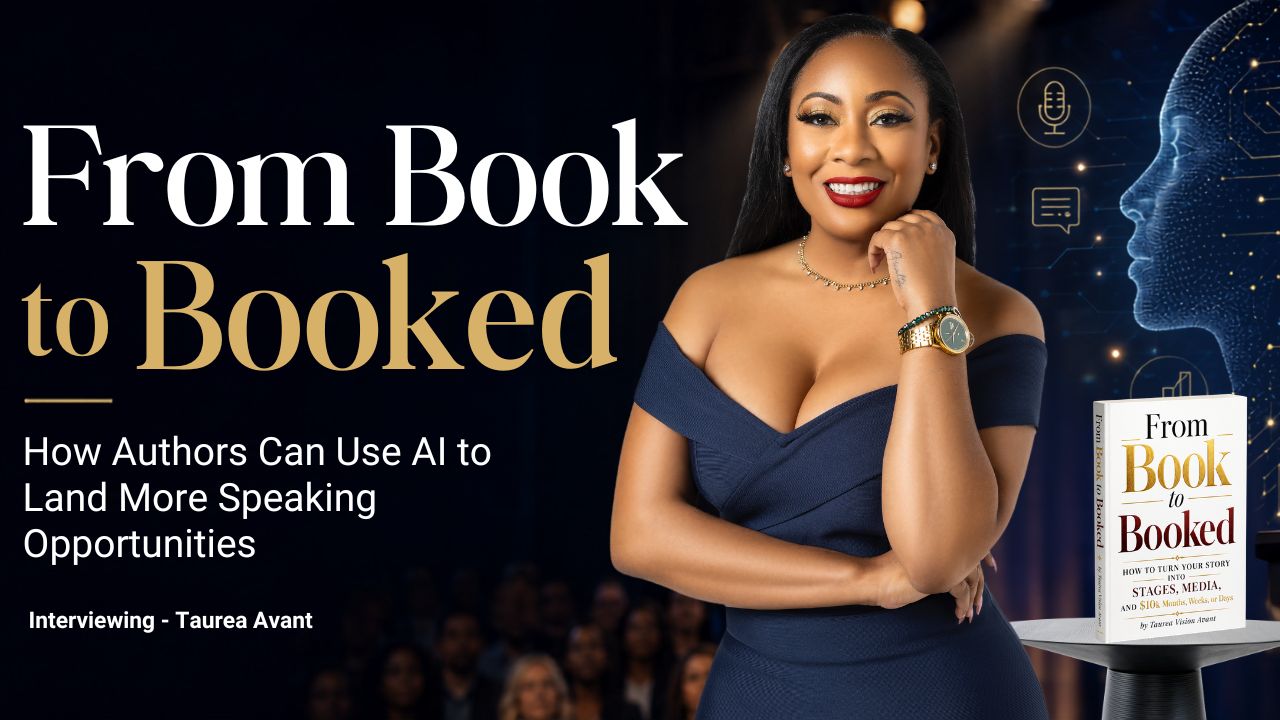
For many authors, publishing a book feels like the finish line. Visibility strategist, international speaker, and bestselling author Taurea Avant sees it differently. In her view, publishing the book is often just the beginning of a much bigger opportunity.
Avant has built her work around helping authors, speakers, coaches, and experts turn their knowledge and stories into visibility, stages, media opportunities, and revenue. Through her “From Book to Booked” approach, she encourages authors to stop looking at their books only as products to sell and start viewing them as strategic business tools.
“Writing the book is not necessarily the hardest part,” Avant explains. “The bigger challenge is figuring out what to do with the book once it is finished. A lot of authors publish the book, put it on Amazon, announce it to their audience, and then they are not really sure what comes next.”
According to Avant, what comes next should be a clear strategy for expanding the message beyond the pages.
A Book Can Become a Speaking Credential
For authors who also want to speak, Avant believes the book can provide an immediate credibility boost. It gives event organizers, podcast hosts, media outlets, and potential clients something tangible that represents the author’s knowledge and expertise.
However, simply being a published author is not enough.
“The goal is not to get on stage and spend 30 or 45 minutes talking about your book,” Avant says. “The goal is to identify the transformation inside the book. What can you teach? What can the audience learn from your story? What problem can your experience help someone solve?”
That shift in thinking can completely change how an author approaches speaking opportunities.
A leadership author, for example, can develop talks around leadership development, team building, workplace culture, or personal growth. An entrepreneur who has written about business can create presentations around sales, marketing, resilience, branding, or entrepreneurship. Someone who has written a personal story can identify the lessons within that experience and turn those lessons into keynote presentations, workshops, or panel topics.
Avant encourages authors to start by looking at something they already have: their table of contents.
“Your chapters can become speaking topics,” she says. “One chapter may become a keynote. Another may become a workshop. Another may become a podcast conversation. Authors sometimes think they need to keep creating completely new content when they may already have months of speaking content sitting inside their book.”
AI Is Changing How Authors Can Position Themselves
The rise of artificial intelligence has created concerns for many writers and authors, especially around originality and the future of publishing. Avant believes authors should pay attention to those concerns, but she also sees tremendous opportunity in using AI as a business and visibility tool.
“AI should not replace your story, your experience, or your voice,” she explains. “But it can help you organize and leverage what you already know much faster.”
For an author looking to expand into speaking, that could mean using AI to brainstorm presentation topics based on a book, strengthen a speaker bio, create podcast pitch ideas, develop workshop outlines, prepare interview talking points, or identify audiences that may benefit from the author’s message.
An author could take the summary of a chapter, for example, and ask an AI tool to suggest five potential keynote topics. From there, the author can decide which ideas fit their expertise, audience, and voice.
“You still have to bring yourself to it,” Avant says. “AI may give you an idea, but your experience is what makes that idea powerful.”
AI can also help authors think more strategically about where their message belongs. Rather than randomly searching for stages, Avant recommends first identifying the audience, the problem that audience faces, and the transformation the speaker provides. AI can then be used to brainstorm types of conferences, organizations, podcasts, associations, and companies where that topic may be relevant.
Visibility Often Leads to More Visibility
One of the biggest lessons Avant teaches speakers is that getting booked can often lead to getting booked again.
Event organizers and podcast hosts regularly research potential guests before making a decision. When they search a speaker’s name, they may look for previous interviews, articles, speaking clips, media coverage, and other evidence that the person has experience delivering their message publicly.
“People are going to look you up,” Avant says. “The question is, what are they going to find?”
This is why she encourages speakers to treat every opportunity as part of a larger visibility strategy. A podcast appearance can become a video clip. A speaking engagement can become photographs, testimonials, and social media content. An article can strengthen credibility when pitching another publication or conference.
Over time, those individual opportunities create what Avant describes as a visibility trail.
“The more evidence people can find that you are already speaking, being interviewed, and sharing your expertise, the easier it becomes for them to imagine you on their stage,” she explains.
That does not mean every opportunity needs to be massive. Avant believes many speakers make the mistake of focusing only on large conferences while overlooking smaller stages that may place them directly in front of the right audience.
“Thirty of the right people can sometimes create a bigger opportunity than 3,000 people who are not your audience,” she says.
Authors Should Think Beyond Book Royalties
Avant also challenges authors to think differently about how a book can generate revenue.
Most authors naturally think first about book sales. Yet the financial opportunity connected to a book can extend much further.
A book may sell for $20, but the authority created by that book can lead to speaking engagements, coaching clients, consulting contracts, partnerships, workshops, media appearances, and other opportunities worth considerably more.
“The book can be one of the least expensive things you offer, but it can be one of the most powerful tools for introducing people to everything else you do,” Avant says.
That is the core of the “From Book to Booked” philosophy. The objective is not simply to sell more books. It is to use the book to create a larger ecosystem around the author’s expertise.
When that happens, the book becomes the introduction, the speaking opportunity expands the message, and the business gives the audience a way to continue working with the author.
The First Step Is Getting Clear
For an author who wants to begin landing more speaking opportunities, Avant recommends starting with clarity.
What do you want to be known for? Who needs your message? What transformation can you provide? What type of stage already attracts those people?
Once those answers become clear, the next step is consistent visibility and pitching.
“The biggest mistake is waiting for someone to discover you,” Avant says. “You have to start putting yourself in the rooms, conversations, interviews, and platforms where your message belongs.”
With the continued growth of podcasts, virtual platforms, live conferences, digital media, and AI tools, authors now have more ways than ever to turn one book into multiple opportunities.
The book may start the conversation, but it does not have to be where the conversation ends.
Learn How to Speak on More Stages
Avant is continuing this conversation through her How to Speak on More Stages Workshop, designed for authors, speakers, coaches, entrepreneurs, and experts who want to increase their visibility and create more speaking opportunities.
The workshop will cover how to position a message for the right stages, develop stronger speaking topics, leverage a book as a credibility tool, identify opportunities, and use AI to help make the visibility process faster and more strategic.
To learn more or register, visit www.HowtoSpeakonMoreStages.com.

Artificial intelligence is no longer simply changing how companies work. It is changing what companies need from their leaders.
In 2026, the question is no longer whether businesses should use AI. The bigger question is whether leaders know how to lead in an AI-powered workplace without losing the human qualities that make organizations successful.
Recent developments across the business world make this shift clear.
Google recently reorganized leadership within its DeepMind AI division as competition among major artificial intelligence companies continues to accelerate. The changes included a new leadership structure, shifting teams and a stronger push toward commercializing its Gemini technology.
At the same time, companies around the world are searching for more workers with AI-related skills. In the United Kingdom, AI or related tools appeared in 9.4% of job postings by the end of June 2026—a record high—even as overall job postings declined.
These developments point to something bigger than a technology trend.
AI has become a leadership issue.
Leaders Can No Longer Delegate AI to the Technology Department
For years, major technology decisions could be handed to the IT department.
That approach will not work with AI.
Artificial intelligence can now influence marketing, customer service, hiring, research, operations, sales, content creation and strategic planning.
That means the CEO, founder or department leader must understand enough about AI to make decisions about how it should be used.
Leaders do not necessarily need to become programmers. They do, however, need to understand what the technology can do, what it cannot do and where using it creates the most value.
The companies that succeed may not be the companies with the most AI tools.
They may simply be the companies whose leaders know how to use those tools more intentionally.
Speed Is Becoming a Competitive Advantage
One lesson coming from today’s AI race is that large organizations can have enormous resources and still struggle when decision-making becomes too slow.
Reuters reported that structural challenges, disagreements over resources and bureaucracy were among the issues cited by sources familiar with Google’s AI efforts.
That lesson applies far beyond technology companies.
Organizations must be able to test ideas, review results and make changes faster than they have in the past.
A leader who takes six months to make a decision about something competitors are testing this week could quickly find the company behind.
This does not mean making reckless decisions.
It means creating a culture where responsible experimentation is encouraged.
The Human Side of Leadership Is Becoming More Valuable
There is an interesting paradox happening.
As machines become better at performing tasks, the skills that make us uniquely human may become even more valuable.
AI can create a report.
It cannot replace trust.
AI can analyze customer data.
It cannot build genuine relationships.
AI can recommend a strategy.
It cannot take responsibility for the consequences of that strategy.
Strong leaders will need emotional intelligence, communication skills, judgment, creativity and the ability to bring people together around a common vision.
Technology can support leadership. It cannot replace leadership.
Leaders Must Decide What Should Remain Human
One of the most important questions executives should ask is simple:
Just because we can automate something, should we?
Companies should consider the customer experience before replacing every human interaction with automation.
The same applies internally.
A difficult employee conversation probably should not become an automated email.
A major client experiencing a problem may need a person rather than a chatbot.
A team facing major organizational changes needs leadership, communication and reassurance.
The winning organizations will likely create the right combination of technological efficiency and human connection.
Training Matters More Than Buying Another Tool
Businesses are already experiencing benefits from AI, but implementation remains uneven.
A 2026 Goldman Sachs survey found that 76% of participating small businesses reported using AI. Among those using it, 93% reported a positive impact and 84% pointed to increased efficiency and productivity as the main benefit. Yet only 14% said AI was fully integrated into their core operations, while 73% said additional training and implementation resources would help.
That gap is important.
Buying technology does not automatically create transformation.
Companies must teach people how to use it.
Leaders should create clear guidelines, provide training and identify practical ways AI can improve existing workflows.
The Leaders Who Win Will Be Adaptable
Every major technology shift creates winners and losers.
The difference is often not the technology itself.
It is how quickly people adapt to it.
The leaders who thrive in this next era will not necessarily be the people who know the most about artificial intelligence.
They will be the people who remain curious enough to learn, confident enough to change and disciplined enough to know where technology belongs—and where human leadership still matters most.
Because in an increasingly automated world, leadership may become more human, not less.
-

 Featured2 years ago
20 Entrepreneurs to Watch Closeout 2024
-

 Real Estate2 years ago
Startups Are Looking To Fractionalize Real Estate Assets, But Should They? – Forbes
-

 Innovation2 years ago
Leo Horacio: A Successful Entrepreneur in the Ecommerce and Online Sales Industry
-

 Innovation2 years ago
Innovators in Social-Emotional Learning: Dr. Myava Clark and Chris Clark Jr.
-

 Music2 years ago
Artist Deydee Signs $350,000 Contract with Rueda Empire LLC
-

 Latest2 years ago
Florida Gov DeSantis signs 15-week abortion ban | Latest News
-

 Uncategorized2 years ago
Trailblazer in Business: Alicia Fitts on Building Wealth and Community Through Faith
-

 Latest2 years ago
Charles zhang recognized by forbes as #1 on michigan’s 2022 best in state wealth advisor list