
Leadership
Literary Equity and Legacy Thinking: Dr. Oliver T. Reid’s Next Era of Transformation

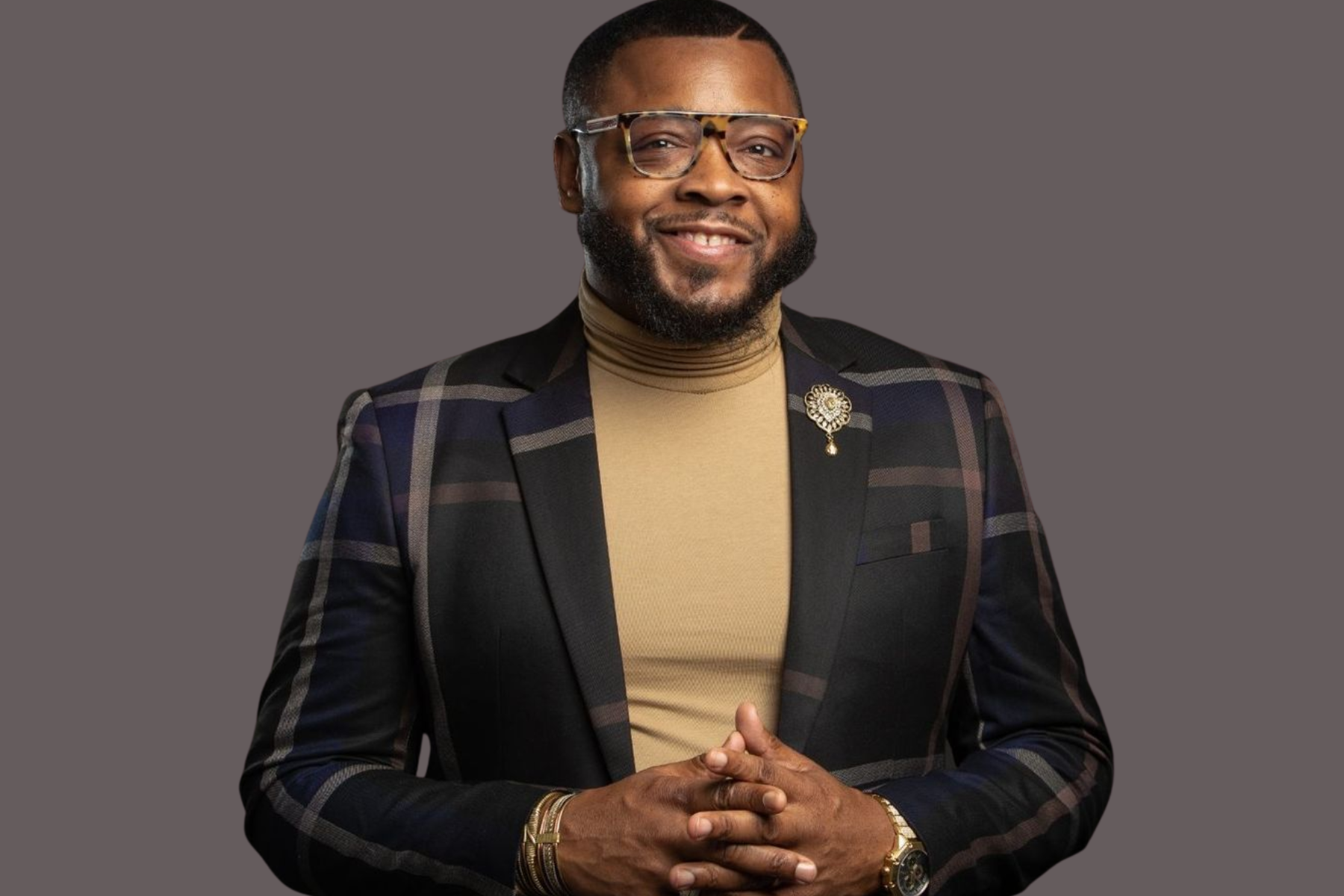
Dr. Oliver T. Reid is an international speaker, prolific author, publisher, and transformational coach whose work sits at the intersection of introspection, identity, and execution. With more than 60 published books, over 30 bestsellers, and contributions to more than 30 anthologies, Dr. Reid has established himself as a powerful voice in modern thought leadership and personal development. His work goes beyond motivation, focusing instead on sustainable clarity, ownership, and alignment. As the founder of I Am A Solution Consulting Firm, LLC, he has built a publishing and brand ecosystem designed to help authors, speakers, and entrepreneurs transform their lived experiences into strategic assets.
Widely known for helping individuals and organizations navigate burnout, identity fatigue, and relational exhaustion, Dr. Reid is also the founder and creator of the Interview Game, a self-reflective framework that challenges people to ask better questions of themselves before seeking answers from the world.
As the creator of the M.I.L.K. Writing System™ and the developer of the INNERVIEW methodology, both designed to help individuals extract meaning, structure, and momentum from their ideas and stories, Dr. Reid’s approach blends deep self-reflection with practical frameworks, enabling clients to move from insight to implementation without losing authenticity.
Recognized for both his leadership and cultural impact, Dr. Reid is a 2016 IALA Distinction of Excellence Legendary Honoree, a 2016 to 2017 NAACP Black Men Image Award recipient, and a 2025 Marquis Who’s Who Honoree. Over the course of his career, he has spoken to millions worldwide and coached individuals across four continents, working with emerging leaders and established professionals alike.
At the core of Dr. Reid’s work is a commitment to ownership of voice, narrative, and purpose. Whether through books, stages, podcasts, or coaching spaces, he continues to help people shift from simply sharing stories to building legacies that endure long after the conversation ends.
Dr. Reid has been featured on HuffPost, Black Enterprise, ABC, CBS, FOX, NBC, Roku TV, and other international media outlets.
Anything New That Has Happened in Your Business Within the Last Three Months?
Over the past three months, our work has entered a powerful new chapter rooted in clarity, ownership, and intentional positioning. We have successfully branded and positioned author-entrepreneurs, speakers, and coaches from across the country by helping them reclaim and leverage what they already had, their stories. Rather than encouraging people to manufacture new narratives, we focused on excavating what was already present but underutilized.
Through our publishing and brand ecosystem, we took literary works that had been sitting in journals, half-finished manuscripts, and long-forgotten drafts and transformed them into literary equity. These stories were no longer treated as static content. Instead, they became living assets, appearing on screens, stages, podcasts, and panels, allowing our clients to expand visibility, authority, and revenue streams at the same time.
What made this season different was the level of integration. We didn’t simply publish books and move on. We built brands around those books. Messaging, voice, and purpose were aligned so that each author could move seamlessly between interviews, live events, podcasts, and visual media without fragmenting their identity. The result has been a growing community of leaders who no longer see themselves as “just authors,” but as communicators with intellectual property that continues to work for them long after publication.
This last quarter has been about ownership, owning your message, your narrative, and your impact. Our focus has been helping people move from exposure to equity, and from visibility to sustainability, with intention and clarity guiding every decision.
Over the past three months, Dr. Oliver T. Reid has been co-leading The Intentional Collab, a collaborative ecosystem designed to help entrepreneurs, speakers, and creatives turn their lived experiences into owned intellectual property and sustainable income. Through workshops, coaching, and implementation-based experiences, the initiative centers on literary equity—teaching participants how to document their stories, publish with purpose, and leverage tools such as course creation, content systems, and emerging AI technologies to build long-term value. The Intentional Collab positions storytelling not just as expression, but as strategy—bridging purpose, ownership, and economic empowerment for founders and leaders building with intention.
Do You Have Anything Coming Up Within the Next Couple of Months?
Launching in Q1 and expanding through Q2 of 2026, Podcast to Pages / Pages to Podcast represents the next evolution of our work. This initiative was built specifically for leaders who refuse to let their ideas live in only one lane. Too often, powerful conversations disappear once a podcast episode ends, and impactful books remain confined to the page. This framework bridges that gap.
Podcast to Pages / Pages to Podcast is designed to help podcasters turn conversations into structured manuscripts, while helping authors transform written work into compelling audio experiences. This is not about recycling content for the sake of volume. It’s about repositioning ideas with purpose and strategy so that every message works harder and travels farther.
Through this framework, spoken insights become books, written words become dynamic audio narratives, and both feed into a cohesive brand pathway. Clients don’t walk away with just exposure, they leave with tangible assets: books, podcasts, scripts, and content ecosystems that speak the same language across platforms.
At its core, this (live event, audiobooks,and anthologies) initiative is about multiplication without dilution. It ensures that no idea is wasted, no voice goes unheard, and no message is trapped in a single medium. Podcast to Pages / Pages to Podcast is for leaders ready to shift from content creation to legacy building, intentionally, strategically, and sustainably.
As an international bestselling author, publisher, and coach, Dr. Oliver T. Reid is redefining how entrepreneurs, speakers, and coaches monetize their message through what he calls literary equity. His new two-day, one-on-one VIP Days are not coaching intensives—they’re execution rooms. Working shoulder-to-shoulder at a high level, Reid helps clients extract their lived experience, clarify their intellectual property, and convert it into books, podcasts, platforms, and revenue-ready assets that travel across stages and screens. The outcome isn’t inspiration—it’s infrastructure. In an era where attention is fleeting, Reid’s VIP Days are designed to help leaders own their narrative, build legacy-driven authority, and leave with tangible, market-ready work that continues to pay dividends long after the room is cleared.
Website: https://wroteby.me/thewritingcoach
Contact Information
Email: drolivertreid@iamasolutionconsultingfirm.com
Website: https://www.iamasolutionconsultingfirm.com
Facebook: https://m.facebook.com/drolivertreidthecoach/
Instagram: @drolivertreid
LinkedIn: http://linkedin.com/in/drolivertreid


Artificial intelligence is changing more than the way companies work. It is changing what companies expect from their leaders.
For years, leadership was often associated with expertise. The person who knew the most, had the most experience, or could solve the hardest problem naturally moved into a position of authority.
In 2026, that model is being challenged.
AI can now analyze information, generate reports, summarize meetings, assist with strategy, write code, automate administrative work, and support increasingly complex business decisions. According to the World Economic Forum, roughly a third of workplace tasks are already automated, while organizations are placing greater value on distinctly human capabilities such as judgment, communication, empathy, and problem identification.
The strongest leaders of the next decade may therefore not be the people with all the answers.
They may be the people who know how to ask the right questions.
Leadership Is Moving From Expertise to Orchestration
AI does not eliminate the need for leaders. It changes their role.
A modern leader increasingly manages a combination of people, technology, automated systems, outside partners, and AI tools. Instead of personally controlling every decision, leaders must determine which decisions can be delegated, which require human judgment, and where technology needs stronger oversight.
This creates a new kind of leadership challenge.
Efficiency is relatively easy to measure. Trust is not.
An AI system may help a company finish a process faster, but employees still need someone who can explain why that process is changing, what the change means for their careers, and how they fit into the organization’s future.
That responsibility belongs to leadership.
Research highlighted by the World Economic Forum shows that 97% of HR leaders surveyed believe human-centered skills are more important in the AI era, while 64% say identifying new problems is becoming more valuable than simply solving existing ones.
That is an important distinction.
When technology becomes better at solving known problems, human advantage increasingly comes from recognizing opportunities and risks that technology has not yet been asked to examine.
Employees Need Direction, Not Just Technology
Companies around the world are investing heavily in AI, but buying technology is not the same as transforming an organization.
Employees are being asked to learn new systems while simultaneously wondering how automation could change their responsibilities.
This makes clarity one of the most valuable leadership skills in 2026.
People need to understand where the organization is going, why changes are happening, and what skills will help them remain valuable.
Recent workforce research points to skills gaps as one of the defining challenges facing organizations as AI adoption accelerates. Companies are increasingly focusing on reskilling, redesigning roles, improving internal mobility, and building more adaptable workforce structures.
Leaders who simply announce new technology may create uncertainty.
Leaders who connect technology with opportunity can create momentum.
The Best Leaders Will Build Future Leaders
There is another challenge developing quietly inside the AI economy.
Many entry-level tasks traditionally helped younger employees build judgment and experience. Preparing reports, performing basic analysis, handling administrative work, and solving smaller operational problems created opportunities to learn how businesses function.
AI is beginning to automate some of those tasks.
That creates efficiency today but could create a leadership-development problem tomorrow.
The World Economic Forum has warned that organizations need to rethink how younger workers gain the practical experience that traditionally prepared them for management.
Companies cannot assume leadership talent will develop automatically.
Managers will need to deliberately give employees opportunities to make decisions, evaluate AI-generated work, communicate with customers, manage uncertainty, and take responsibility for outcomes.
In other words, organizations must automate tasks without accidentally automating away the experiences that develop good leaders.
Trust Will Become a Competitive Advantage
Technology moves quickly. Human confidence usually moves more slowly.
That gap matters.
Organizations with strong leadership cultures will be able to introduce new technologies without creating unnecessary fear or confusion. Employees are more likely to experiment, learn, and adapt when leaders communicate openly about both opportunities and risks.
This does not mean leaders need to have complete certainty.
In fact, modern leadership increasingly requires being comfortable saying, “We don’t know yet, but here is how we are going to find out.”
That type of transparency can be more powerful than pretending to have perfect answers in an environment that changes every month.
The Leader of the Future Is an Enabler
The AI era is not reducing the importance of leadership.
It is exposing the difference between authority and leadership.
Authority can tell people what to do.
Leadership helps people understand where they are going.
As technology becomes more capable, the qualities that make human leaders valuable become clearer: judgment, curiosity, courage, empathy, communication, accountability, and the ability to create direction when certainty is unavailable.
The organizations that succeed will not simply have the most advanced AI.
They will have leaders who know how to combine advanced technology with capable, confident people.
That may become the defining leadership advantage of the AI age.
Artificial intelligence is no longer simply changing how companies work. It is changing what companies need from their leaders.
In 2026, the question is no longer whether businesses should use AI. The bigger question is whether leaders know how to lead in an AI-powered workplace without losing the human qualities that make organizations successful.
Recent developments across the business world make this shift clear.
Google recently reorganized leadership within its DeepMind AI division as competition among major artificial intelligence companies continues to accelerate. The changes included a new leadership structure, shifting teams and a stronger push toward commercializing its Gemini technology.
At the same time, companies around the world are searching for more workers with AI-related skills. In the United Kingdom, AI or related tools appeared in 9.4% of job postings by the end of June 2026—a record high—even as overall job postings declined.
These developments point to something bigger than a technology trend.
AI has become a leadership issue.
Leaders Can No Longer Delegate AI to the Technology Department
For years, major technology decisions could be handed to the IT department.
That approach will not work with AI.
Artificial intelligence can now influence marketing, customer service, hiring, research, operations, sales, content creation and strategic planning.
That means the CEO, founder or department leader must understand enough about AI to make decisions about how it should be used.
Leaders do not necessarily need to become programmers. They do, however, need to understand what the technology can do, what it cannot do and where using it creates the most value.
The companies that succeed may not be the companies with the most AI tools.
They may simply be the companies whose leaders know how to use those tools more intentionally.
Speed Is Becoming a Competitive Advantage
One lesson coming from today’s AI race is that large organizations can have enormous resources and still struggle when decision-making becomes too slow.
Reuters reported that structural challenges, disagreements over resources and bureaucracy were among the issues cited by sources familiar with Google’s AI efforts.
That lesson applies far beyond technology companies.
Organizations must be able to test ideas, review results and make changes faster than they have in the past.
A leader who takes six months to make a decision about something competitors are testing this week could quickly find the company behind.
This does not mean making reckless decisions.
It means creating a culture where responsible experimentation is encouraged.
The Human Side of Leadership Is Becoming More Valuable
There is an interesting paradox happening.
As machines become better at performing tasks, the skills that make us uniquely human may become even more valuable.
AI can create a report.
It cannot replace trust.
AI can analyze customer data.
It cannot build genuine relationships.
AI can recommend a strategy.
It cannot take responsibility for the consequences of that strategy.
Strong leaders will need emotional intelligence, communication skills, judgment, creativity and the ability to bring people together around a common vision.
Technology can support leadership. It cannot replace leadership.
Leaders Must Decide What Should Remain Human
One of the most important questions executives should ask is simple:
Just because we can automate something, should we?
Companies should consider the customer experience before replacing every human interaction with automation.
The same applies internally.
A difficult employee conversation probably should not become an automated email.
A major client experiencing a problem may need a person rather than a chatbot.
A team facing major organizational changes needs leadership, communication and reassurance.
The winning organizations will likely create the right combination of technological efficiency and human connection.
Training Matters More Than Buying Another Tool
Businesses are already experiencing benefits from AI, but implementation remains uneven.
A 2026 Goldman Sachs survey found that 76% of participating small businesses reported using AI. Among those using it, 93% reported a positive impact and 84% pointed to increased efficiency and productivity as the main benefit. Yet only 14% said AI was fully integrated into their core operations, while 73% said additional training and implementation resources would help.
That gap is important.
Buying technology does not automatically create transformation.
Companies must teach people how to use it.
Leaders should create clear guidelines, provide training and identify practical ways AI can improve existing workflows.
The Leaders Who Win Will Be Adaptable
Every major technology shift creates winners and losers.
The difference is often not the technology itself.
It is how quickly people adapt to it.
The leaders who thrive in this next era will not necessarily be the people who know the most about artificial intelligence.
They will be the people who remain curious enough to learn, confident enough to change and disciplined enough to know where technology belongs—and where human leadership still matters most.
Because in an increasingly automated world, leadership may become more human, not less.

Not long ago, artificial intelligence lived quietly in the background—powering search engines, automating reports, and optimizing supply chains. Today, it sits beside employees as a daily coworker, drafting ideas, analyzing strategy, and influencing decisions in real time. This shift marks more than a technological upgrade; it represents a fundamental rewrite of leadership itself. Managers are no longer leading teams composed solely of people—they are guiding hybrid workforces where human judgment intersects with machine intelligence. As AI moves from tool to collaborator, leadership is being redefined in ways many organizations are only beginning to understand. The question facing executives is no longer whether AI will change work, but whether leaders are prepared to change with it.
From Managing People to Managing Human–AI Collaboration
Gone are the days when leadership was solely about managing people and processes. The rise of AI has shifted the role of leaders from controllers to orchestrators. Now, leaders must harmonize human creativity with AI’s efficiency, leveraging data-driven decision-support systems.
Key challenges for leaders in this new model:
- Determining who does what: What should humans handle? What is best left to AI?
- Shifting focus from control to orchestration, blending human ingenuity with machine precision.
- Designing workflows that optimize both human and machine strengths.
Leadership is no longer about directing a single workforce—it’s about managing a dynamic collaboration between humans and machines.
Decision-Making in the Age of AI Assistance
In an AI-augmented workplace, leaders are not just relying on instinct or experience to make decisions—they’re now balancing intuition with algorithmic insights. With AI providing instantaneous data-driven recommendations, the temptation to follow these outputs blindly is strong. However, the challenge for leaders is to not simply trust AI but to question it, challenge it, and understand its limitations.
New leadership responsibilities include:
- Questioning AI outputs and ensuring they align with organizational goals.
- Balancing intuition with AI insights to make informed decisions.
- Maintaining critical thinking and not blindly relying on AI’s recommendations.
AI can assist, but leaders remain responsible for the final call.
Emotional Intelligence Becomes More Important, Not Less
As AI takes on more analytical tasks, the need for emotional intelligence in leadership only grows. Machines may excel at crunching numbers, but they lack empathy, understanding, and the ability to motivate human teams. Leaders must step up as emotional anchors, providing communication, trust, and psychological safety in a rapidly changing work environment.
Key emotional intelligence skills leaders need:
- Communication to clarify AI’s role and manage expectations.
- Trust-building to reduce employee concerns about AI.
- Psychological safety to create an environment where employees feel valued, not threatened.
- Conflict resolution to address concerns over AI integration and potential job displacement.
Strong leadership in this new AI-augmented world is defined not by technical know-how but by the ability to connect with and support people through technological change.
Redefining Skills and Talent Development
AI’s rise demands a shift in how leaders approach talent development. It’s no longer enough to focus solely on traditional skills. Leaders must foster AI literacy, adaptability, and creative problem-solving across their teams.
Areas leaders should focus on for skill development:
- AI literacy to ensure employees are comfortable working with AI tools.
- Adaptability to respond to ever-changing technological advancements.
- Creative problem-solving to encourage employees to think beyond AI’s capabilities.
- Continuous learning to keep teams evolving as new tools and technologies emerge.
Leaders must cultivate evolving capabilities, coaching their teams to leverage AI while honing skills that machines cannot replicate. The role of leadership shifts from being a manager to being a coach and capability builder.
Ethics, Trust, and Responsible AI Leadership
As AI becomes more integrated into the workplace, it also brings new ethical challenges. Bias in algorithms, privacy concerns, and the risk of over-automation are just a few of the issues leaders must address.
Ethical responsibilities for leaders:
- Establishing guidelines for AI usage to ensure fairness and transparency.
- Ensuring data privacy and protecting employee/customer information.
- Addressing biases in AI algorithms to prevent unintended discrimination.
- Building trust by being transparent about AI’s role in decision-making.
Ethical leadership isn’t just about protecting privacy or avoiding discrimination—it’s about creating a culture of trust, where AI is used to enhance human capabilities rather than diminish them.
The Leader as a Learning Partner with AI
In this new landscape, leaders are no longer the all-knowing authorities they once were. Instead, they must embrace a mindset of continuous learning, staying ahead of the curve by becoming proficient in AI tools themselves.
Shifting leadership responsibilities include:
- Learning AI tools to understand their potential and limitations.
- Modeling curiosity and an eagerness to experiment with new technologies.
- Fostering a culture of collaboration between AI and human expertise.
- Helping teams adapt to AI as a thinking partner, not just a tool to be controlled.
Leaders who adapt to this new dynamic will thrive by fostering an environment of mutual learning between AI and their teams.
Leadership in the AI-Augmented Future
The future of leadership is one where human intuition and AI-driven insights work side by side. As AI becomes an indispensable part of the daily workflow, leaders must evolve from traditional management models to ones that prioritize collaboration, ethical decision-making, and continuous learning. Success in this new era will depend on a leader’s ability to blend technological awareness with emotional intelligence, all while guiding teams through the complexities of an AI-augmented workplace. Leaders who embrace this shift, balancing human understanding with data-driven strategies, will not only survive—they will thrive in the AI-powered future.
-

 Leadership2 years ago
20 Entrepreneurs to Watch Closeout 2024
-

 Real Estate2 years ago
Startups Are Looking To Fractionalize Real Estate Assets, But Should They? – Forbes
-

 Innovation3 years ago
Leo Horacio: A Successful Entrepreneur in the Ecommerce and Online Sales Industry
-

 Innovation2 years ago
Innovators in Social-Emotional Learning: Dr. Myava Clark and Chris Clark Jr.
-

 Music2 years ago
Artist Deydee Signs $350,000 Contract with Rueda Empire LLC
-

 Latest2 years ago
Florida Gov DeSantis signs 15-week abortion ban | Latest News
-

 Money2 years ago
Trailblazer in Business: Alicia Fitts on Building Wealth and Community Through Faith
-

 Latest2 years ago
Charles zhang recognized by forbes as #1 on michigan’s 2022 best in state wealth advisor list