
Featured
The Future of Energy: Can the World Wean Itself Off Oil?


Global reliance on oil has been a defining factor of modern history. Wars have been fought over it, economies built upon it, and political alliances shaped by it. Yet as the urgency of climate change grows, the world is facing a critical question: Can we truly move beyond oil?
The answer is complicated. Renewable energy is advancing at record speed. Solar and wind power costs have plummeted in the last decade, and governments from Europe to Asia are investing billions into green infrastructure. Electric vehicles are becoming mainstream, with some countries setting deadlines to ban new gasoline-powered cars.
Still, oil remains deeply entrenched. It powers global transportation, fuels industries, and underpins the economies of nations like Saudi Arabia, Russia, and Venezuela. Cutting off oil too quickly could cause global instability, yet maintaining dependence accelerates climate disaster.
The transition will not be smooth. Developing nations argue they need affordable energy to grow, while developed countries push for faster climate commitments. The geopolitical stakes are high: as countries reduce reliance on oil, traditional energy superpowers may lose influence while nations leading in clean technology rise in power.
The question isn’t whether the world will transition—it’s how fast. Experts warn that current policies are not enough to meet the Paris Agreement’s goal of limiting warming to 1.5°C. The window for action is closing, and every year of delay makes the transition more costly.
The world’s energy future hangs in the balance. Success will require not just innovation, but global cooperation at a level rarely seen in history.


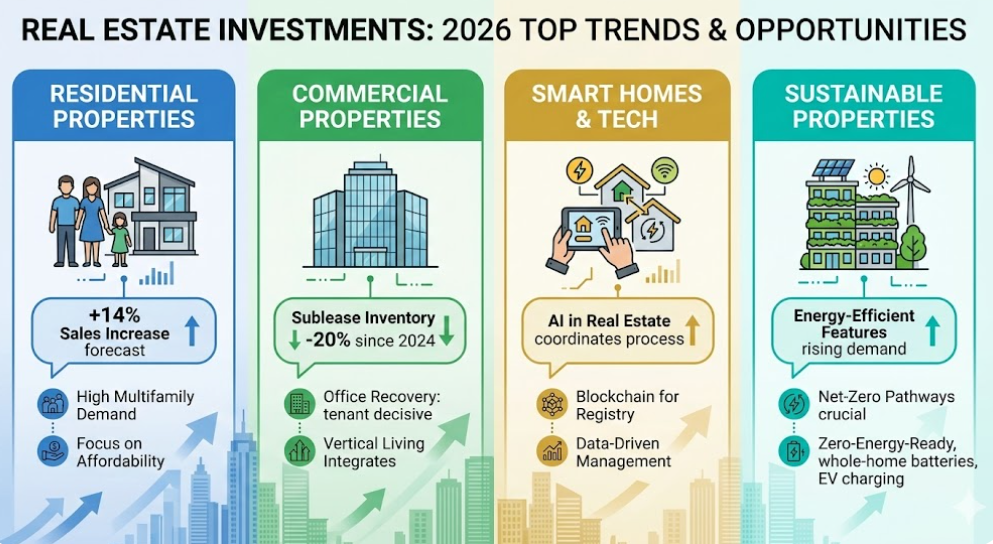
As we inch closer to 2026, the real estate market is primed for a seismic shift. With technology, sustainability, and evolving societal trends at the forefront, the next few years promise to redefine how we live, invest, and interact with properties. From the surge in smart home technology to the growing demand for eco-friendly buildings, the landscape of real estate is rapidly transforming. But what will it look like in 2026? Whether you’re a seasoned investor, a first-time homebuyer, or just an observer of the market’s pulse, understanding these trends is crucial. Here’s a closer look at the key forces that will shape the real estate market in the years to come.
Real Estate Market Trends to Watch in 2026
As we inch closer to 2026, the real estate market is primed for a seismic shift. With technology, sustainability, and evolving societal trends at the forefront, the next few years promise to redefine how we live, invest, and interact with properties. From the surge in smart home technology to the growing demand for eco-friendly buildings, the landscape of real estate is rapidly transforming. But what will it look like in 2026? Whether you’re a seasoned investor, a first-time homebuyer, or just an observer of the market’s pulse, understanding these trends is crucial. Here’s a closer look at the key forces that will shape the real estate market in the years to come.
Sustainability and Green Building Practices
The call for sustainability in real estate has never been louder. As environmental awareness grows, eco-friendly homes and green building practices are becoming more than just trends—they’re expected to be the norm by 2026. Here’s a breakdown of how sustainability is shaping the real estate market:
- Consumer Demand for Eco-Friendly Homes:
- Energy-efficient homes are no longer a luxury but a necessity for today’s homebuyers.
- Green homes are expected to increase in demand due to rising environmental consciousness.
- Key Features of Sustainable Homes:
- Solar Panels: More homes will feature solar energy systems as cost-effective, sustainable energy sources.
- Energy-Efficient Appliances: Homeowners will prioritize appliances that reduce energy consumption, including high-efficiency HVAC systems and smart thermostats.
- Sustainable Materials: Builders will focus on using sustainable materials such as recycled steel, bamboo, and low-VOC paints to reduce environmental impact.
- Government Incentives and Regulations:
- Governments are expected to offer more rebates and tax credits for sustainable development.
- Stricter building codes and regulations will ensure that new constructions adhere to higher environmental standards.
Urban vs. Suburban Real Estate Shifts
The real estate market in 2026 will continue to see a tug-of-war between urban and suburban living. Let’s explore the factors at play:
- Post-Pandemic Trends:
- The remote work revolution has made suburban areas more attractive, as people seek larger homes and more space for home offices.
- Affordable Housing: Suburbs offer more affordable housing options compared to congested urban areas.
- Urban Revitalization:
- Cities are transforming with mixed-use developments that combine residential, retail, and entertainment spaces.
- Urban areas will evolve to attract young professionals looking for convenience and community.
- Work-from-Home Impact:
- The continued rise of remote work means buyers will prioritize homes that accommodate home offices and outdoor spaces.
- There will be heightened demand for properties with flexible layouts, both in the suburbs and in urban areas.
Real Estate Investment Opportunities
Real estate remains a cornerstone of investment, but the landscape is changing. Here’s where savvy investors will be focusing in 2026:
- Emerging Real Estate Markets:
- Sun Belt Cities: Areas like Phoenix, Austin, and Tampa will see sustained growth due to migration trends and strong job markets.
- Secondary Markets: Smaller, emerging cities are poised for growth as people look to relocate from pricier metropolitan areas.
- Short-Term Rentals:
- Platforms like Airbnb will continue to shape the short-term rental market, with investors focusing on vacation homes and rental properties in popular destinations.
- Investment in vacation rental properties will increase as travelers prioritize unique, home-like experiences over traditional hotel stays.
- Commercial Real Estate Trends:
- Office Space: As remote work becomes permanent for many companies, the demand for traditional office space will decline.
- E-Commerce Growth: The rise in online shopping will lead to increased demand for warehouse spaces and logistics properties.
- Industrial Spaces: A surge in e-commerce and last-mile delivery will spur the growth of industrial real estate investments.
The Impact of Interest Rates and Financing
Fluctuating interest rates and evolving mortgage products will have a significant impact on the real estate market in 2026. Here’s how:
- Interest Rates:
- Higher Interest Rates could lead to decreased buyer purchasing power, affecting affordability and slowing down the pace of transactions.
- Low Interest Rates (if they remain favorable) will incentivize homebuyers and investors to act quickly, but potential rate hikes may curb demand.
- Mortgage Trends:
- More flexible mortgage products will emerge, offering homebuyers more options.
- Adjustable-rate mortgages (ARMs) may become more popular, allowing buyers to lock in lower initial rates.
- Affordability and Financing:
- The real estate market may become less accessible for first-time homebuyers, but government-backed programs could help bridge the gap.
- New lending structures will cater to the diverse financial needs of both buyers and investors, making it easier to secure financing.
What’s Next for Real Estate?
The trends shaping the real estate market in 2026 will have a profound and lasting impact on how we buy, sell, and invest in property. Let’s wrap it up:
- Adapting to the Green Revolution: Sustainable building practices will be the foundation of future real estate development.
- Shifting Preferences: Urban areas will continue to evolve, while suburban living will likely maintain its appeal for families and remote workers.
- Emerging Markets and Investment Opportunities: Investors will keep an eye on emerging real estate markets and short-term rental opportunities, while commercial spaces undergo a transformation.
- Interest Rates: Mortgage and interest rates will play a crucial role in determining the accessibility of real estate, pushing for more flexible financing solutions.
In 2026, real estate will be shaped by adaptability and innovation. Whether you’re looking to buy, sell, or invest, staying ahead of these trends will be essential. With sustainability, technology, and evolving market dynamics at the forefront, the real estate landscape of 2026 will offer plenty of opportunities for those who are prepared.
Ready for the Future of Real Estate?
The real estate market in 2026 is set to undergo transformative shifts that will impact how we live and invest for years to come. As sustainability, technology, and changing social dynamics become the driving forces, those who stay informed and agile will be best positioned to succeed. Whether you’re a homebuyer looking for the perfect green home, an investor eyeing emerging markets, or a developer navigating the evolving demands of urban and suburban living, 2026 promises to be a pivotal year.
Prepare now, adapt to the trends, and position yourself for success in this exciting new real estate era.

Not long ago, artificial intelligence lived quietly in the background—powering search engines, automating reports, and optimizing supply chains. Today, it sits beside employees as a daily coworker, drafting ideas, analyzing strategy, and influencing decisions in real time. This shift marks more than a technological upgrade; it represents a fundamental rewrite of leadership itself. Managers are no longer leading teams composed solely of people—they are guiding hybrid workforces where human judgment intersects with machine intelligence. As AI moves from tool to collaborator, leadership is being redefined in ways many organizations are only beginning to understand. The question facing executives is no longer whether AI will change work, but whether leaders are prepared to change with it.
From Managing People to Managing Human–AI Collaboration
Gone are the days when leadership was solely about managing people and processes. The rise of AI has shifted the role of leaders from controllers to orchestrators. Now, leaders must harmonize human creativity with AI’s efficiency, leveraging data-driven decision-support systems.
Key challenges for leaders in this new model:
- Determining who does what: What should humans handle? What is best left to AI?
- Shifting focus from control to orchestration, blending human ingenuity with machine precision.
- Designing workflows that optimize both human and machine strengths.
Leadership is no longer about directing a single workforce—it’s about managing a dynamic collaboration between humans and machines.
Decision-Making in the Age of AI Assistance
In an AI-augmented workplace, leaders are not just relying on instinct or experience to make decisions—they’re now balancing intuition with algorithmic insights. With AI providing instantaneous data-driven recommendations, the temptation to follow these outputs blindly is strong. However, the challenge for leaders is to not simply trust AI but to question it, challenge it, and understand its limitations.
New leadership responsibilities include:
- Questioning AI outputs and ensuring they align with organizational goals.
- Balancing intuition with AI insights to make informed decisions.
- Maintaining critical thinking and not blindly relying on AI’s recommendations.
AI can assist, but leaders remain responsible for the final call.
Emotional Intelligence Becomes More Important, Not Less
As AI takes on more analytical tasks, the need for emotional intelligence in leadership only grows. Machines may excel at crunching numbers, but they lack empathy, understanding, and the ability to motivate human teams. Leaders must step up as emotional anchors, providing communication, trust, and psychological safety in a rapidly changing work environment.
Key emotional intelligence skills leaders need:
- Communication to clarify AI’s role and manage expectations.
- Trust-building to reduce employee concerns about AI.
- Psychological safety to create an environment where employees feel valued, not threatened.
- Conflict resolution to address concerns over AI integration and potential job displacement.
Strong leadership in this new AI-augmented world is defined not by technical know-how but by the ability to connect with and support people through technological change.
Redefining Skills and Talent Development
AI’s rise demands a shift in how leaders approach talent development. It’s no longer enough to focus solely on traditional skills. Leaders must foster AI literacy, adaptability, and creative problem-solving across their teams.
Areas leaders should focus on for skill development:
- AI literacy to ensure employees are comfortable working with AI tools.
- Adaptability to respond to ever-changing technological advancements.
- Creative problem-solving to encourage employees to think beyond AI’s capabilities.
- Continuous learning to keep teams evolving as new tools and technologies emerge.
Leaders must cultivate evolving capabilities, coaching their teams to leverage AI while honing skills that machines cannot replicate. The role of leadership shifts from being a manager to being a coach and capability builder.
Ethics, Trust, and Responsible AI Leadership
As AI becomes more integrated into the workplace, it also brings new ethical challenges. Bias in algorithms, privacy concerns, and the risk of over-automation are just a few of the issues leaders must address.
Ethical responsibilities for leaders:
- Establishing guidelines for AI usage to ensure fairness and transparency.
- Ensuring data privacy and protecting employee/customer information.
- Addressing biases in AI algorithms to prevent unintended discrimination.
- Building trust by being transparent about AI’s role in decision-making.
Ethical leadership isn’t just about protecting privacy or avoiding discrimination—it’s about creating a culture of trust, where AI is used to enhance human capabilities rather than diminish them.
The Leader as a Learning Partner with AI
In this new landscape, leaders are no longer the all-knowing authorities they once were. Instead, they must embrace a mindset of continuous learning, staying ahead of the curve by becoming proficient in AI tools themselves.
Shifting leadership responsibilities include:
- Learning AI tools to understand their potential and limitations.
- Modeling curiosity and an eagerness to experiment with new technologies.
- Fostering a culture of collaboration between AI and human expertise.
- Helping teams adapt to AI as a thinking partner, not just a tool to be controlled.
Leaders who adapt to this new dynamic will thrive by fostering an environment of mutual learning between AI and their teams.
Leadership in the AI-Augmented Future
The future of leadership is one where human intuition and AI-driven insights work side by side. As AI becomes an indispensable part of the daily workflow, leaders must evolve from traditional management models to ones that prioritize collaboration, ethical decision-making, and continuous learning. Success in this new era will depend on a leader’s ability to blend technological awareness with emotional intelligence, all while guiding teams through the complexities of an AI-augmented workplace. Leaders who embrace this shift, balancing human understanding with data-driven strategies, will not only survive—they will thrive in the AI-powered future.

In today’s world, leadership is no longer about position, power, or a title on a business card. In 2026, leadership is about influence, clarity, and the ability to guide people through uncertainty. As industries shift, technology evolves, and global events reshape the economy, strong leadership has become one of the most valuable skills in business and in life.
Leadership in a Time of Change
Organizations are navigating constant change. Artificial intelligence is transforming how businesses operate. Remote and hybrid work models continue to redefine workplace culture. Economic pressures and global tensions require leaders to make faster, smarter decisions.
In this environment, leadership is less about control and more about direction. Teams want leaders who can communicate clearly, stay calm under pressure, and provide vision when circumstances feel unstable. Employees are not just looking for instruction; they are looking for reassurance and purpose.
Emotional Intelligence Is Non-Negotiable
One of the biggest shifts in modern leadership is the emphasis on emotional intelligence. Leaders who understand how to manage their own emotions — and recognize the emotions of others — are more effective at building trust.
Today’s workforce values authenticity. People want to work for leaders who listen, who are transparent about challenges, and who are willing to admit when they do not have all the answers. Emotional intelligence builds loyalty, improves communication, and reduces workplace conflict.
Vision Over Micromanagement
Micromanagement is quickly becoming outdated. High-performing teams thrive when leaders focus on outcomes rather than controlling every step of the process. Clear expectations combined with trust create an environment where innovation can grow.
Great leaders set the destination. They define the mission. Then they empower their team to execute. This approach increases accountability and strengthens confidence within the organization.
Adaptability Is the New Power Skill
Leadership in 2026 demands flexibility. Markets shift quickly. Consumer behavior changes. Technology upgrades overnight. Leaders who resist change struggle. Those who adapt thrive.
Adaptable leaders stay informed. They continue learning. They are willing to pivot when necessary without abandoning their long-term vision. This balance between stability and flexibility separates strong leaders from average managers.
Integrity Builds Long-Term Success
In an era where information spreads instantly, integrity matters more than ever. Employees, customers, and partners expect ethical decision-making and transparency. Reputation can be built in years and damaged in minutes.
Leaders who operate with integrity create cultures of accountability and respect. They understand that long-term success is built on trust, not shortcuts.
Leadership Beyond Business
Leadership is not limited to corporate settings. It applies to entrepreneurs, community organizers, educators, parents, and anyone guiding others toward a goal. The core principles remain the same: vision, influence, emotional awareness, adaptability, and integrity.
True leadership is not about being the loudest voice in the room. It is about being the most grounded. It is about inspiring confidence without intimidation and creating movement without force.
Final Thoughts
As the world continues to evolve, leadership will remain one of the most critical skills for personal and professional growth. Titles may open doors, but character keeps them open. Influence will always outweigh authority.
In 2026, leadership is simple in theory but powerful in practice: provide clarity, build trust, stay adaptable, and lead with purpose.
-

 Featured1 year ago
20 Entrepreneurs to Watch Closeout 2024
-

 Innovation2 years ago
Leo Horacio: A Successful Entrepreneur in the Ecommerce and Online Sales Industry
-

 Innovation2 years ago
Innovators in Social-Emotional Learning: Dr. Myava Clark and Chris Clark Jr.
-

 Music2 years ago
Artist Deydee Signs $350,000 Contract with Rueda Empire LLC
-

 Latest2 years ago
Charles zhang recognized by forbes as #1 on michigan’s 2022 best in state wealth advisor list
-

 Uncategorized1 year ago
Trailblazer in Business: Alicia Fitts on Building Wealth and Community Through Faith
-

 Latest1 year ago
Florida Gov DeSantis signs 15-week abortion ban | Latest News
-

 Lifestyle2 years ago
Phillip Austin brings outlaw country to General Duffy’s stage – The Bulletin