
Featured
The Tax Translator: Cecily Welch Brings Clarity to the Financial Decisions Behind Business Success

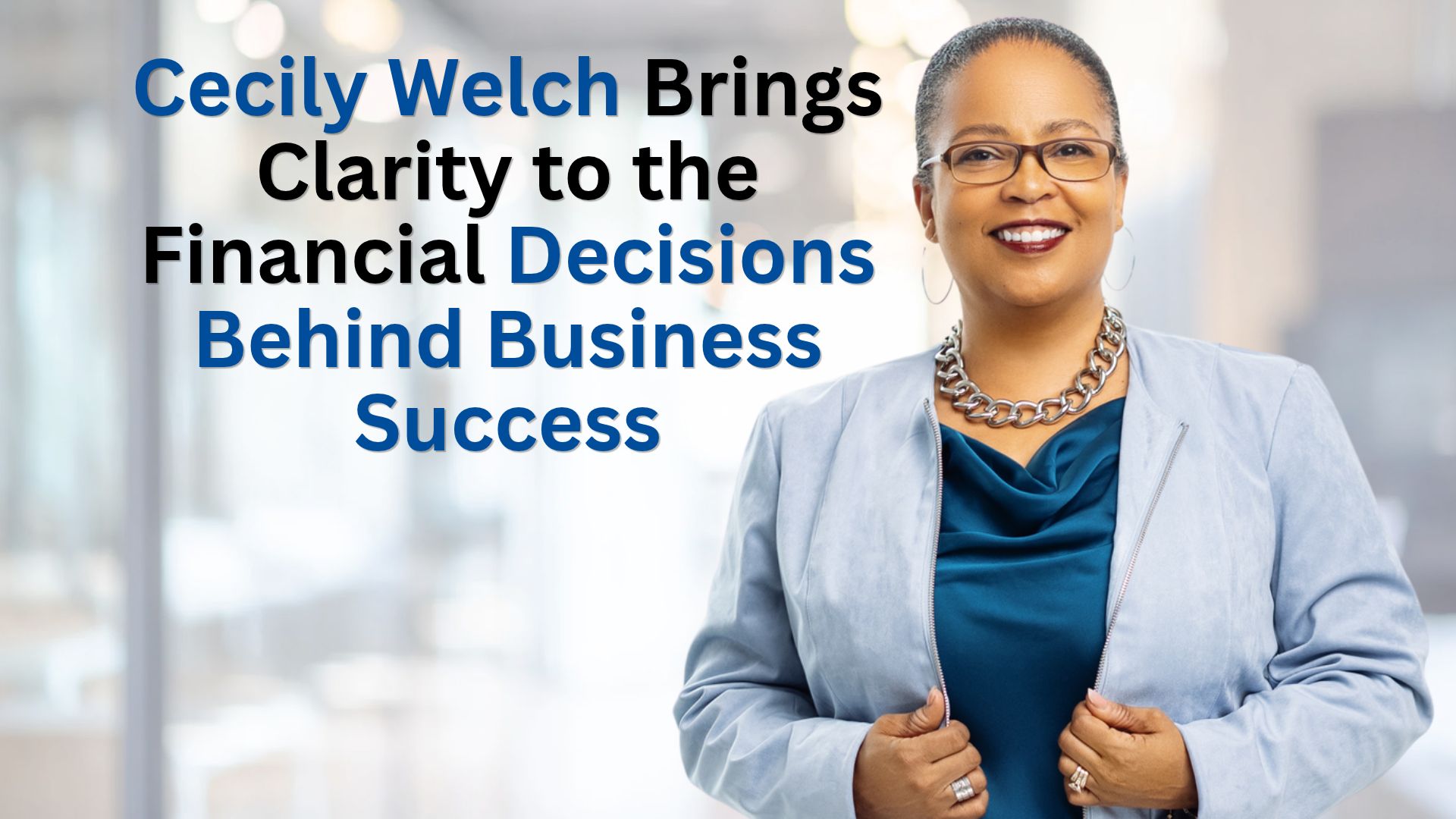
Cecily Welch, CPA, PFS, CFP®, known as The Accountant You Can Understand® and The Tax Translator™, has spent more than 30 years helping entrepreneurs, executives, and business owners see the bigger picture when it comes to their finances. Her work is grounded in a simple but important belief: taxes do not exist in a silo. Budgeting matters. Investing matters. Business decisions matter. But all of those decisions ultimately swim in what Cecily describes as the “tax ocean,” and understanding that connection can make a significant difference in how people manage and grow their businesses.
Much of Cecily’s work centers on what she calls the “CPA matchmaking gap” — the observation that friction between business owners and their accountants is rarely a matter of incompetence on either side. More often, it’s a mismatch of expectations that neither party has ever put into words. A business owner may not know how to ask the right questions; an accountant may assume a level of financial fluency the client doesn’t yet have. Cecily’s speaking, writing, and course work all return to the same idea: once that gap is named, it can be closed.
Throughout her career, Cecily has built a reputation for communicating financial information in ways that are understandable without sacrificing accuracy or rigor. Her work has taken her nationally and internationally, including speaking at events such as the World Diversity in Leadership Conference in Edmonton, Alberta, and the AICPA National Not-for-Profit Conference. She has also created the So You Want to Start a Business series, now part of the Georgia Society of CPAs’ course portfolio.
Beyond working directly with entrepreneurs and executives, Cecily also trains small and midsized CPA firms to reduce the friction that can sometimes exist between business owners and their accountants. She does this by encouraging clearer communication and offering tangible tools that help clients feel confident in their professional relationships, rather than experiencing what she describes as “buyer’s remorse.” The same work helps CPA firms identify and work within their own sweet spot, rather than trying to be all things to all clients.
Cecily’s passion for making financial information accessible extends into her work as an author and podcast host. She is the author of Your Accountant Is Full of $.H.I.T.: Shortsighted, Hesitant, and Intimidated by Taxes, a book that takes a direct and engaging approach to a subject many business owners find intimidating. She is also the host of The Tax Translator™ podcast, where she continues her work of helping people understand the tax implications behind the financial decisions they make.
Her approach reflects decades of experience while remaining focused on a challenge that continues to affect entrepreneurs today: knowing what questions to ask, and understanding how financial decisions connect to one another — what Cecily calls “decision-readiness,” or knowing when you’re actually prepared to scale a business, go full-time, or take on capital, rather than relying on gut instinct alone. Through education, speaking, writing, podcasting, and professional coaching, Cecily Welch continues to translate complex financial and tax concepts into information people can actually use.
Taking the Conversation About Business and Taxes to the National and International Stage
Cecily also has several significant engagements coming up that will allow her to continue sharing her expertise with entrepreneurs and business leaders.
She will be speaking at the World Diversity in Leadership Conference in Edmonton, Canada; her topic, “You Can’t Talk About Equity Without Talking About Taxes,” highlights Cecily’s ability to explain the significance of what seems like an obscure tax law, and why everyone should actually care about tax policy.
When she spoke at the 126th National Business League Conference, presenting “The Real Accounting Decisions That Make or Break a Startup (No, AI Can’t Decide for You),” audience members could be seen nodding along as Cecily worked through real-world examples — like you asking for strategy but your CPA asking for your bank statements. The presentation reflects one of the central themes of Cecily’s work: entrepreneurs need to understand the limitations of technology. Fact-gathering, templates, and checklists save time, but they don’t replace discernment. How to do a task may have gotten easier, but deciding whether to do it still requires the business owner and their professional advisors.
Cecily is also scheduled to be featured on the television show BizTalk, on NowMedia TV, where she plans to draw out a related distinction: AI has made countless business tasks faster — drafting a marketing email, building a first-pass budget, generating a template contract. But books and taxes carry real consequences when they’re wrong, in a way a rough draft doesn’t. A miscategorized expense or a missed filing deadline doesn’t just cost time to fix; it can cost money, trigger penalties, or undermine a loan or investment down the line. For Cecily, that’s the point worth making to a broader audience: speed is valuable, but it isn’t a substitute for the accuracy and nuance that experience brings. Case in point — there are places where the IRS’s own instructions are wrong, and it’s the taxpayer, not the instructions, who’s on the hook for getting it right.
Together, these engagements reflect the continued demand for Cecily’s ability to translate complex financial concepts into conversations that entrepreneurs can understand and apply.
A New Podcast Brings The Tax Translator™ Mission to a Wider Audience
One of Cecily’s most recent developments is the successful launch of her podcast, The Tax Translator™, in conjunction with the Georgia Society of CPAs.
The podcast provides another platform for Cecily to do what she has built her career around: making tax knowledge accessible without sacrificing rigor or accuracy. Rather than treating taxes as an isolated subject, her approach encourages entrepreneurs and business owners to recognize how taxation intersects with budgeting, investing, business planning, and other financial decisions.
The podcast expands the reach of Cecily’s work beyond conferences, professional engagements, and one-on-one conversations, giving listeners another way to access her perspective on the financial issues that can affect their businesses. Entrepreneurs interested in listening can find The Tax Translator™ through the Georgia Society of CPAs and Cecily’s YouTube channel.
What Being “The Accountant You Can Understand®” Actually Means
Cecily built her practice, and now her platform, around a simple observation: technically correct advice is worthless to a business owner who can’t act on it. Most entrepreneurs have, at some point, walked out of a meeting with their CPA holding the right answer and no idea what to do with it — because the explanation never connected back to the decision in front of them. Being The Accountant You Can Understand® is not about simplifying tax law until it’s wrong. It’s about translation: taking a specific rule, provision, or filing requirement and tying it directly to the real decision an owner is trying to make, in language that doesn’t require an accounting degree to follow.
That distinction is the value Cecily brings to a stage, a boardroom, or a one-on-one conversation. She isn’t positioning herself as a replacement for a business owner’s CPA — she’s often explicit that she isn’t the audience’s accountant, which is part of what allows her to be candid in ways a practicing CPA, worried about the relationship, sometimes can’t be. Her job, as she describes it, is to close the gap between what an accountant knows and what a client understands well enough to use — so the two sides stop talking past each other and start making better decisions together.
A Case Study: When Tax Law Saved a Marriage
One case that stays with Cecily involves a couple living in a house the husband had bought years earlier, before they met. It was a good house. But after they had children, the neighborhood changed and the school system stopped serving the kids well, and the wife was ready to move. The husband wasn’t. They’d split household costs the way a lot of couples do — he covered the house, she covered everything else — and there was nothing wrong with that arrangement. But he’d quietly convinced himself that if she were the one paying for the house, she wouldn’t be so eager to sell it.
Cecily’s read was different. This wasn’t really a money argument, and it wasn’t really a school-district argument either — both of them were being perfectly logical, they just couldn’t see each other’s logic. So she translated. She walked the husband through what selling the house would actually look like financially, including the tax exclusions available on the gain from selling a primary residence. He wasn’t going to net as much as he’d assumed, but between the real numbers and those exclusions, there was enough to make the move work. Once he could see the math clearly, the standoff turned into a decision — and the family moved.
A New Book Challenges Entrepreneurs to Rethink Their Relationship With Their Accountant
Another major project on the horizon is the launch of Cecily’s new book, Your Accountant Is Full of $.H.I.T.: Shortsighted, Hesitant, and Intimidated by Taxes, scheduled for fall 2026.
The title immediately captures Cecily’s straightforward approach to a subject that can often feel complicated or uncomfortable. Rather than presenting accounting and taxes as topics entrepreneurs should simply leave to someone else, the book is built around understanding the financial information that affects a business, and equipping owners to ask the right questions that mitigate communication friction.
The book builds on Cecily’s broader mission as The Accountant You Can Understand® and The Tax Translator™. Her work consistently emphasizes communication and education, helping business owners understand how best to communicate with their CPA — because the CPA has to focus on what the numbers are before shifting to what the numbers mean. In that sense, the book helps business owners better help their accountant.
For entrepreneurs, the relationship with an accountant is an important one. Cecily believes business owners should have enough understanding to participate meaningfully in those conversations, and her new book provides another vehicle for that philosophy — giving readers a chance to approach taxes with greater awareness and confidence.
With its fall 2026 launch, Your Accountant Is Full of $.H.I.T. adds another chapter to Cecily’s ongoing work of making tax conversations more accessible, practical, and understandable for the people making business decisions every day.
Contact Information
Cecily Welch, CPA, PFS, CFP®
Business: Cecily Welch CPA, LLC
Email: cecily.welch@cecilywelchcpa.com
Website: www.CecilyWelch.cpa
Facebook: facebook.com/CecilyWelchCPA/
Instagram: instagram.com/cecilywelchcpa/
LinkedIn: linkedin.com/in/cecilywelch/


A commercial space can look affordable during a tour and become expensive once the full operating costs are understood. Rent is one part of the decision. Repairs, utilities, access, and the right to conduct your planned business can matter just as much.
Before committing, evaluate the property as a place your business must operate every day. A useful comparison considers total costs, practical fit, and the obligations written into the lease.
Calculate the full cost of occupancy
Ask for an itemized explanation of charges beyond base rent. Depending on the agreement, tenants may pay some property taxes, insurance costs, common area expenses, or maintenance charges. Find out how charges are calculated, when they can change, and how prior costs compare with estimates. Add your own expected utilities, internet, cleaning, and insurance to the budget.
In a simplified example, a space advertised at $2,000 per month might require another $600 for additional building charges and estimated services. At $2,600 before other expenses, it deserves a different affordability review. These figures are hypothetical; obtain property-specific numbers before comparing options.
Confirm that your business can operate there
A landlord’s approval does not by itself establish that your intended use meets local requirements. The U.S. Small Business Administration advises checking local zoning when choosing a business location. Describe the actual activities you plan to conduct, including events, food service, classes, or recording sessions, rather than relying on a broad label such as “office.” Confirm applicable requirements with the appropriate local offices.
Clarify repairs and improvements
Ask who handles plumbing, heating and cooling, electrical issues, and other repairs. Discuss the condition of major systems and any work needed before opening. If changes are required, establish who approves them, who pays, and what happens to improvements at the end of the lease. Have agreed terms documented in the final agreement.
Test the customer experience
Visit when customers would normally arrive. Check parking availability and cost, lighting, entrances, deliveries, restrooms, and building access. Consider whether noise restrictions or limited operating hours conflict with your plans. Review accessibility needs and responsibilities with qualified professionals rather than assuming a visually appealing space meets every requirement.
Understand the commitment
Review rent increases, deposits, renewal terms, personal guarantees, and rules about assignment, subleasing, or early termination. These provisions can affect your options if the business grows or circumstances change. A commercial real estate attorney can explain the proposed agreement and help identify issues before you sign.
Compare spaces using the same assumptions and time period. A lower advertised rent may come with higher costs or fewer usable hours. The right space should support the business you intend to run within obligations you understand and can reasonably carry.
Source note
U.S. Small Business Administration — Launch your business, business location guidance. https://www.sba.gov/counseling/launch-your-business/

You pick up your phone to check the weather and end up answering a client message, reviewing a payment notification, and responding to a social media comment. Before breakfast is over, the workday has started without a decision to begin it.
For entrepreneurs, one device can hold nearly every part of the business. Creating boundaries means deciding how that access should work so every notification does not automatically become an assignment.
Define what requires an immediate response
Write down the situations that truly need urgent attention. A problem affecting an event happening today may require a quick response. A question about next month’s availability may be able to wait. Give clients and team members clear instructions for urgent issues, and explain when they can normally expect a reply.
Create a home for business communication
When work requests arrive through texts, email, direct messages, and several group chats, tracking them becomes difficult. Choose a primary channel for client requests whenever practical. If a request arrives elsewhere, move the necessary details into that system. A consistent place to manage work reduces the need to search every app for unfinished conversations.
Choose when to check messages
Try scheduled communication windows that match your business. You might review messages at the start of the day, after lunch, and before closing. A business providing live support will need a different arrangement, perhaps with assigned coverage. The goal is to make response times deliberate and realistic.
Change the phone settings
Review which apps can interrupt you. Consider turning off nonessential alerts, using a focus setting during concentrated work, and moving business apps away from the main screen. Allow important contacts or urgent channels through when necessary. Start with one change you can maintain instead of designing an elaborate system you will abandon.
Give the day a closing routine
Before finishing, record incomplete tasks, identify tomorrow’s first priority, and check for anything genuinely time-sensitive. Put those details somewhere reliable. This gives unfinished work a place to wait instead of relying on repeated phone checks to remember it.
Make room for exceptions without losing the rule
Launches, travel, and events may require extra availability. Decide when that temporary schedule ends and communicate it. If every week becomes an exception, review whether workload, staffing, or client expectations need to change.
Start with one protected period, such as dinner or the first thirty minutes after waking. Watch what happens and adjust where necessary. A boundary becomes useful when it works well enough to repeat during an ordinary, busy week.
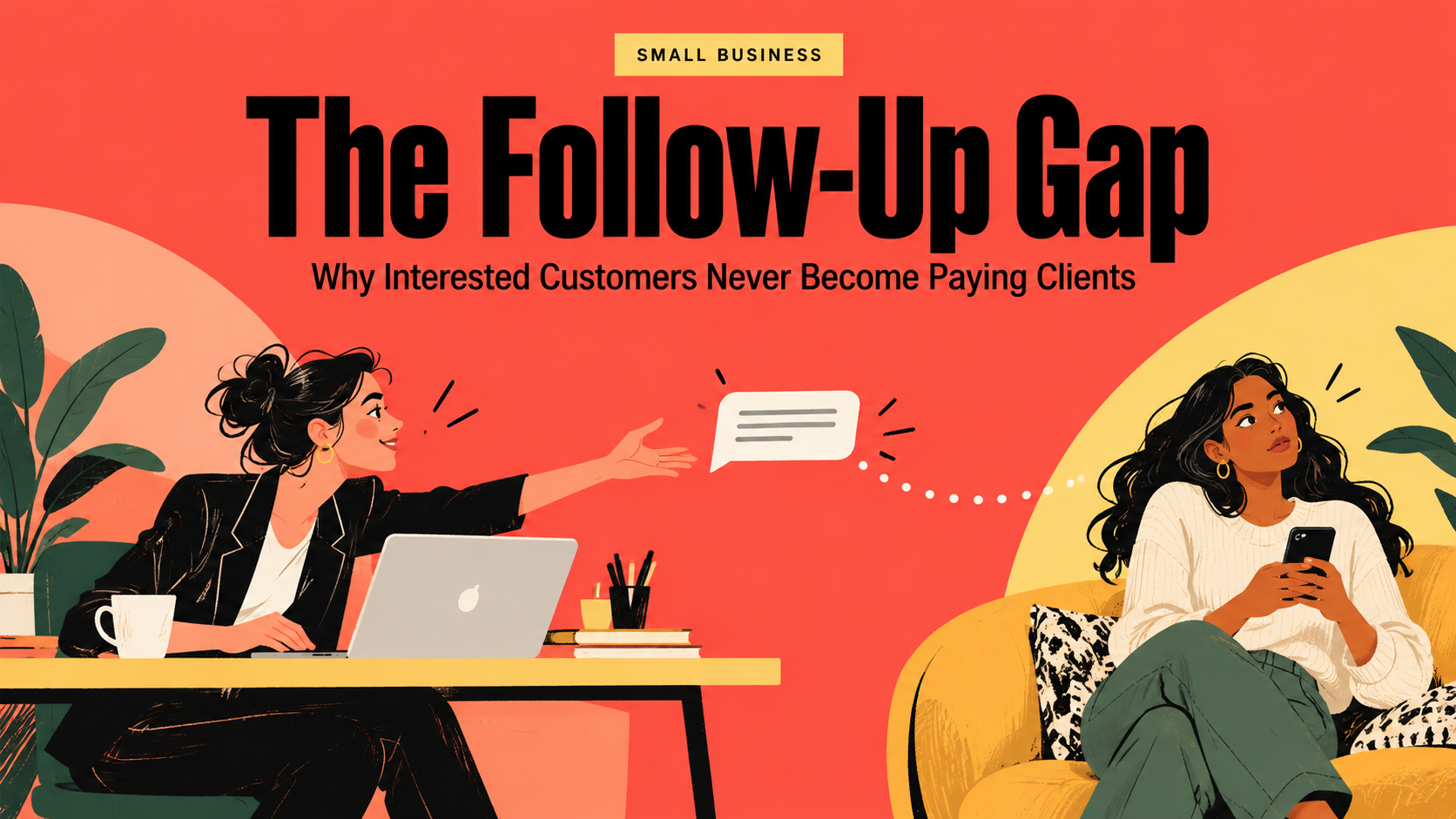
A potential customer asks for pricing. The owner sends a proposal, receives no reply, and moves on. Two weeks later, neither person has taken another step. The business cannot tell whether the prospect lost interest, became busy, or still has an unanswered question.
Follow-up helps resolve that uncertainty. It gives an interested person a clear path toward a decision while helping the business understand which opportunities are still active.
Make the next step clear
A conversation can feel productive without producing a commitment. Before it ends, agree on what happens next. Will the prospect review a proposal, book a call, or confirm a start date? Ask when a follow-up would be helpful. “May I check back on Thursday after you have reviewed the details?” is easier to act on than “Let me know.”
Keep a record of the actual conversation
Record what the person asked for, the problem they want to solve, their timing, and any concerns they raised. A spreadsheet or customer relationship management system can help. The important part is keeping a reliable record with a next action and a responsible team member. Avoid collecting personal details that are unnecessary for serving the prospect.
Give each message a purpose
A useful follow-up adds context or removes an obstacle. If someone asked about scheduling, send the available dates. If they questioned fit, explain who the service is designed to help and where its limits are. A relevant example may help them evaluate the offer, provided you have permission to share it and represent the result accurately.
For example: “Hello Jordan, you mentioned wanting to start next month. I have included the two scheduling options we discussed. Would either work for your team, or has your timeline changed?” The message is specific and leaves room for an honest answer.
Use a reasonable follow-up rhythm
Build the timing around the buyer’s decision process and any agreement you made. An urgent service request and a large annual purchase may require different approaches. Avoid treating every unanswered message as permission to contact someone daily. Honor requests to stop, and make it easy for people to decline.
Know when to close the conversation
An opportunity should not stay open forever simply because no one said no. Send a brief closing message when appropriate: “I will close this inquiry for now. If the timing changes, you are welcome to reach out.” That creates a clear stopping point without pressure.
Review where conversations stall. If prospects repeatedly ask the same question, improve the proposal or sales conversation. If replies go unanswered internally, fix ownership and response handling. Better follow-up begins with making the buying process easier to understand.
-

 Leadership2 years ago
20 Entrepreneurs to Watch Closeout 2024
-

 Real Estate2 years ago
Startups Are Looking To Fractionalize Real Estate Assets, But Should They? – Forbes
-

 Innovation2 years ago
Leo Horacio: A Successful Entrepreneur in the Ecommerce and Online Sales Industry
-

 Innovation2 years ago
Innovators in Social-Emotional Learning: Dr. Myava Clark and Chris Clark Jr.
-

 Music2 years ago
Artist Deydee Signs $350,000 Contract with Rueda Empire LLC
-

 Latest2 years ago
Florida Gov DeSantis signs 15-week abortion ban | Latest News
-

 Money2 years ago
Trailblazer in Business: Alicia Fitts on Building Wealth and Community Through Faith
-

 Latest2 years ago
Charles zhang recognized by forbes as #1 on michigan’s 2022 best in state wealth advisor list