
Leadership
Most High Achieving Women Are Overthinking Income, Dr. Stevii Aisha Mills Is Showing Them What Actually Works

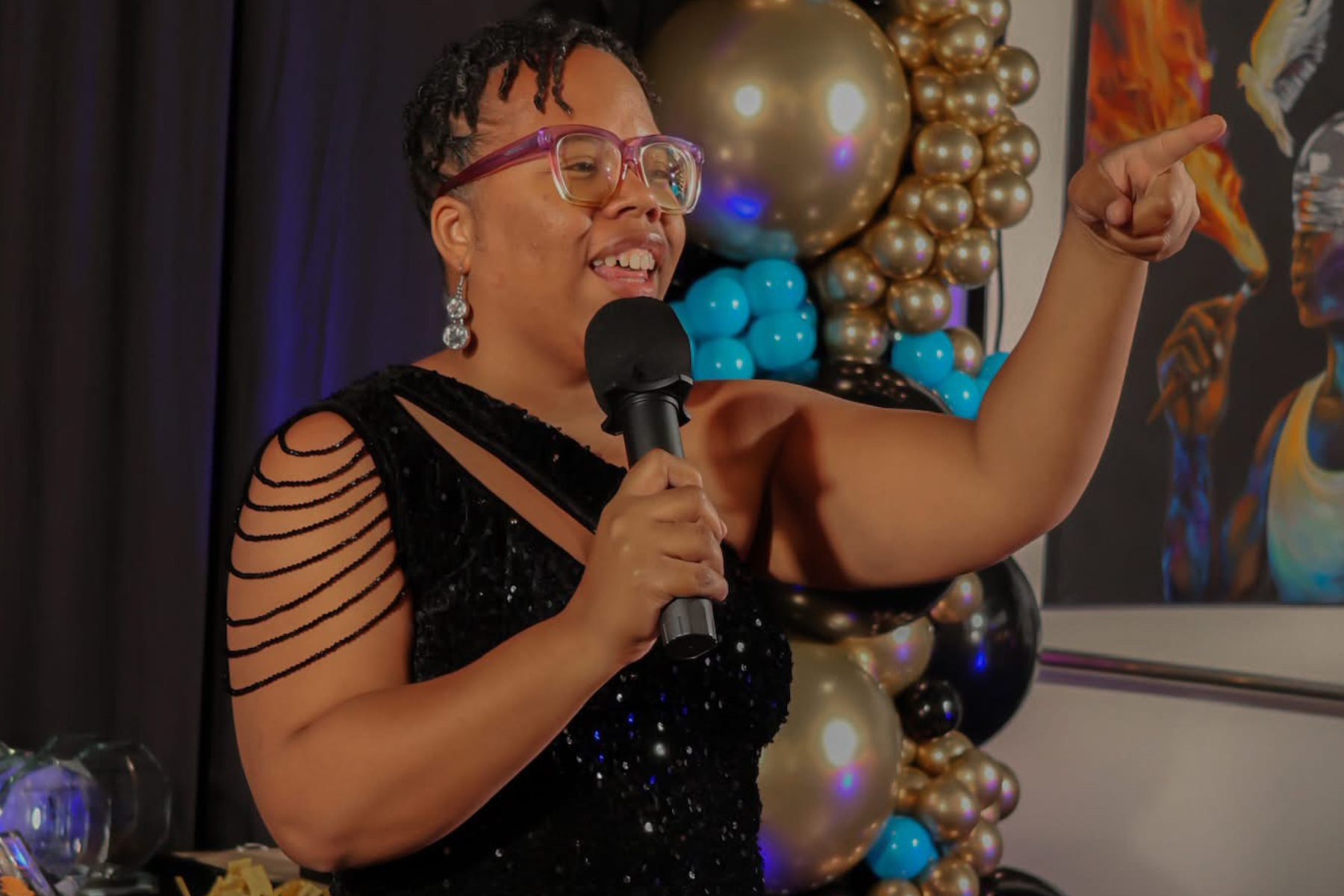
Dr. Stevii Aisha Mills is challenging the way high achieving women think about making money. While many professionals spend months planning, researching, and second guessing their next move, she is focused on one thing, execution.
As a Visibility Coach and Strategist, Dr. Stevii helps high achieving women turn their expertise into income through strategic visibility and consistent action. With more than 30 years of experience in marketing and public relations and over 16 years as an entrepreneur, she has built multiple six figure businesses by committing to what works instead of overcomplicating the process.
That perspective was shaped through experience. After facing significant financial setbacks and rebuilding from less than zero, Dr. Stevii made a defining shift. She stopped relying on complex strategies and focused on taking clear, consistent action that produces results. That decision became the foundation of her work today.
She is the creator of the Click To Cash® framework, a process designed to help entrepreneurs and professionals turn attention into income through visibility and consistency. In addition to coaching and consulting, she is a prolific author with more than 30 published books, including Cultivating Your It Factor and Click To Cash. Her work and entrepreneurial journey have been featured on major media platforms including BET, CBS, FOX, and ABC.
Her message is simple but direct. Visibility is not about popularity. It is about positioning, connection, and creating opportunities that lead to revenue.
Simplifying Success Through Immediate Action
In recent months, Dr. Stevii has intentionally moved away from traditional, slow moving business strategies and toward faster, execution driven models. Rather than encouraging professionals to spend months preparing, she helps high achieving women move from idea to execution in as little as 24 to 72 hours.
This shift has led to the expansion of her Click To Cash® framework into short term, focused experiences designed to eliminate overwhelm and create immediate momentum. These programs are built to help women quickly position themselves, communicate their expertise, and begin generating income opportunities without delay.
She also demonstrates these principles in real time. Through daily content creation and TikTok Shop affiliate marketing, Dr. Stevii shows her audience exactly how attention converts into revenue. Instead of teaching from theory, she models the process as it happens, reinforcing that consistency is what drives results in today’s digital economy.
Another area of growth has been The Permission Slip Club, a community she co hosts with Dr. Marilyn Porter. With more than 30 members and growing, the space is designed to support high achieving women in making bold decisions, increasing visibility, and creating real time income opportunities. The focus is simple, take action, stay visible, and execute consistently.
Elevating Women Leaders and Expanding Community Impact
As her platform grows, Dr. Stevii is using her visibility to highlight other women who are making meaningful contributions in their industries and communities.
Among them is Rhonda Woolard, whose work advances child welfare and sexual abuse support through innovative programs and advocacy. She is also spotlighting Keisha Boatwright, a certified 200 hour yoga instructor and creative entrepreneur who combines wellness and crafting to build community centered experiences.
Dr. Stevii is also highlighting Faye Horton, owner of F S Horton Insurance Professionals LLC, who helps sales professionals scale their authority and impact through high ticket coaching and strategic sales systems. In addition, she is featuring Shawnise White, owner of Beauty Mint Studio, a luxury beauty lounge known for delivering elevated beauty experiences centered on confidence and professionalism.
Through these collaborations, she continues to reinforce a core belief, visibility creates opportunity, not just for herself, but for the women she brings into the spotlight.
At the same time, she remains committed to growing The Permission Slip Club as a space where high achieving women can take action, increase their visibility, and create new income streams through consistent execution.
More information about The Permission Slip Club can be found at signingmyslip.com.
Dr. Stevii Aisha Mills is not just teaching visibility. She is redefining how high achieving women turn what they already know into real income.
Her message is clear. Stop overthinking. Start executing. The results will follow.
Contact Information
Email: stevii@stevii.com
Website: www.stevii.com
Facebook: Stevii Aisha Mills
Instagram: @juststevii
Sponsors:
Shawnise White
Instagram: @beautymintstudio

Keisha Boatwright
Website: www.soulistickesh.com
Rhonda Woolard
Website: www.rjwguidingservices.com

Faye Horton
Website: http://fayesaxonhorton.com


Why Black Women Need to Speak Up About Bad Partnerships—and Why “I Want Out” Is Opening the Conversation
How many women have to get burned before we stop treating silence like loyalty?
A partnership can begin with excitement, shared goals, and promises of what you will build together. You bring your ideas, your relationships, your money, and your name. You believe that the person beside you wants to see you win.
Then something changes.
The promises become excuses. The responsibilities become uneven. Questions about money lead to arguments. Your contributions are overlooked, but your commitment is still expected.
And when you finally consider leaving, you face another question: What will people say?
For Black women navigating business, leadership, and community relationships, that question can carry weight. Will speaking up make you look difficult? Will people accuse you of tearing someone down? Will telling the truth cost you opportunities?
Those fears deserve an honest conversation. So does the price of keeping everything hidden.

The Partnership Can End. The Damage Can Follow.
A bad partnership can cost more than money.
It can affect your confidence, your reputation, and your willingness to trust yourself. You may find yourself questioning decisions you once felt certain about. You may hesitate to pursue another opportunity because the last one left you exhausted.
Sometimes the hardest part is admitting that something you worked so hard to build is hurting you.
You keep remembering the original vision. You hope one more conversation will fix the problem. You tell yourself that leaving would mean everything you invested was wasted.
But how much more must you lose before you give yourself permission to move forward?
You can believe in collaboration and still recognize when a particular partnership needs to end.
Black Women Deserve Room to Tell the Whole Story
There is room to celebrate Black women’s strength while also making space for their disappointment, anger, and pain.
We should be able to say, “This happened, and it hurt me,” without having to prove that we are strong enough to handle it alone.
We should be able to ask questions about a partnership without being labeled disloyal. We should be able to set boundaries without being called selfish. And we should be able to leave an unhealthy situation without carrying all the blame for its failure.
Supporting our community must include accountability within our community.
A shared background, a familiar face, or an impressive platform does not remove the need for honest communication and follow-through.
We deserve partnerships where respect is visible in the work, the decisions, and the way concerns are handled.
Your Experience Could Help Another Woman Recognize the Warning Signs
When women share what they have learned, others gain something they may desperately need: a clearer picture of what to watch for.
Someone may recognize the pattern of unanswered questions. Someone may realize she has been carrying responsibilities that were supposed to be shared. Someone may finally understand why she feels uncomfortable, even though everyone around her keeps calling the opportunity a blessing.
Speaking up can mean sharing the questions you wish you had asked, the boundaries you wish you had set, or the moment you realized you needed to leave.
It does not require sharing every private detail. A truthful account of your own experience can teach a powerful lesson.
And women who are not ready to speak publicly deserve support, too. The responsibility for harmful behavior belongs to the person who caused it. Sharing a story should be a choice made with care.
For the woman who is ready, her experience may become the warning she wishes someone had given her.
“I Want Out” Is Making Space for This Conversation
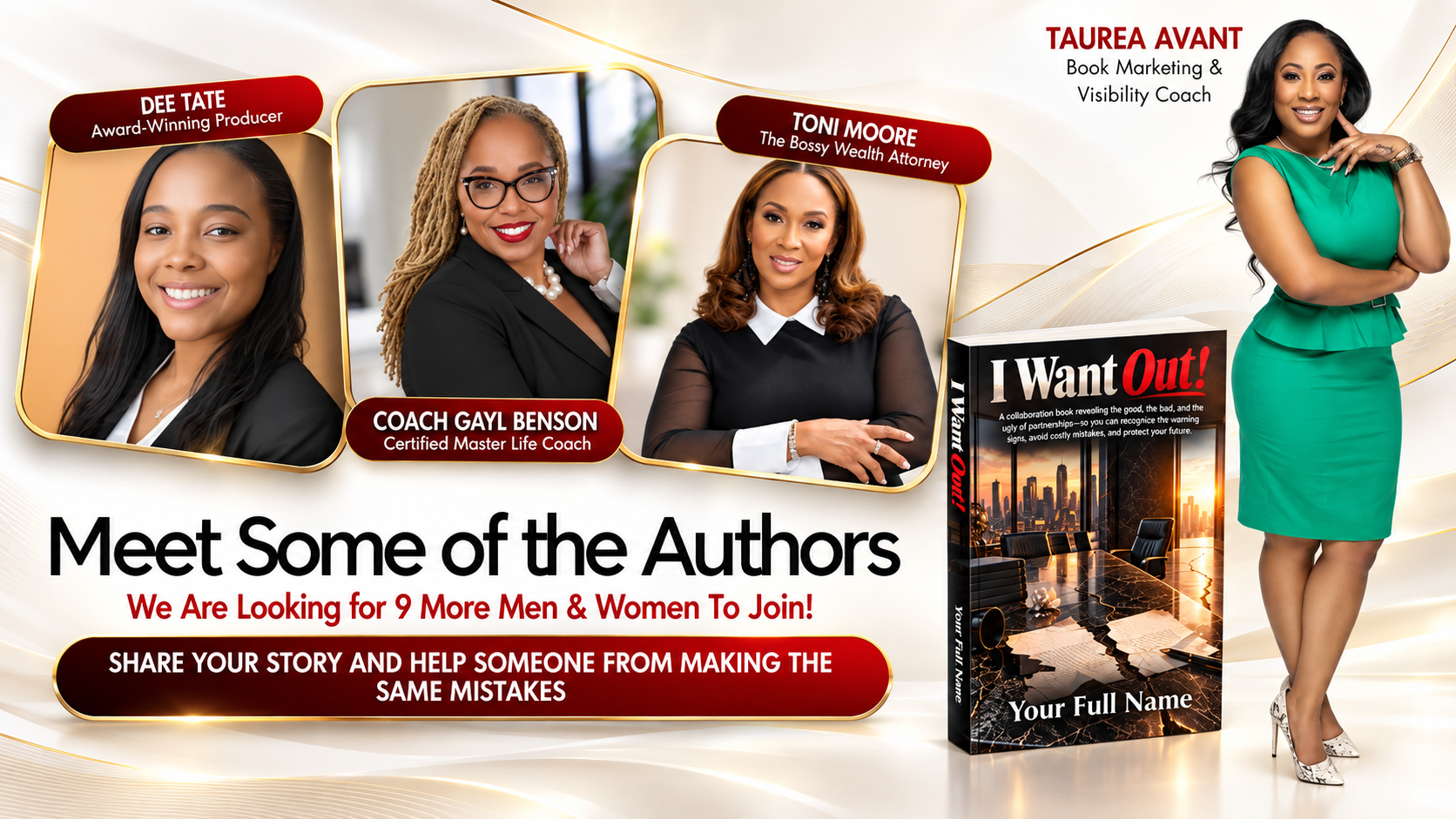
The forthcoming collaboration book “I Want Out” brings this conversation into the open.
A collaboration book revealing the good, the bad, and the ugly of partnerships—so you can recognize the warning signs, avoid costly mistakes, and protect your future.
The project creates an opportunity for women and men to share experiences and lessons from partnerships—and to help others think more carefully about what they enter, what they accept, and when they choose to leave.
Among the women participating are Toni Moore, Dee Tate, and Coach Gayl Benson, whose professional backgrounds bring different perspectives to the conversation.
Toni Moore is an attorney and business strategist. Her website includes education for entrepreneurs on protecting their brands through trademark knowledge, adding a business protection perspective to the group.
Dee Tate is an award-winning film producer, multidisciplinary artist, poet, and author whose work explores faith, healing, identity, and becoming. She founded Chicago Production Assistants in 2016, growing a community of more than 7,000 members. Her work encourages people to recognize their lived experiences as a source of purpose, creativity, and impact.
Coach Gayl Benson is a Certified Master Life and Cognitive Behavior Coach who helps women challenge limiting beliefs and move toward their next chapter. Through her L.I.E.—Let It End—framework, she guides women in examining the stories they have accepted about themselves and recognizing their power to choose what comes next.
Their backgrounds reflect the range of voices this conversation needs: business knowledge, creative expression, and personal growth.
Meet the Woman Bringing “I Want Out” Together
“I Want Out” is being put together by Taurea “Vision” Avant, who is bringing contributors together to share honest stories and help others make more informed partnership decisions.
Taurea “Vision” Avant is a two-time TEDx speaker, author, and founder of Book Profits Club™. She helps authors, speakers, coaches, and entrepreneurs turn their books into tools for visibility, business growth, and income. Having spoken in more than 10 countries, Taurea brings an international perspective to helping people share their stories with purpose. Through publishing support, collaboration books, training, and media opportunities, she guides authors beyond writing toward building a platform. She also created Author Allstars™ Magazine to spotlight authors worldwide. Her mission is to help 1,000 authors earn more than $10,000 monthly by building businesses around their books.
We Are Looking for More Women and Men to Join Us
Have you experienced a partnership that left you saying, “I want out”?
Did you learn a difficult lesson about trust, boundaries, accountability, or walking away? Could sharing your experience help someone recognize the warning signs sooner or feel less alone?
We are inviting more women and men to become coauthors of “I Want Out.” While this article highlights Black women’s voices, the book welcomes both women and men who want to share honest experiences and valuable lessons about partnerships.
Your story does not have to end with everything perfectly resolved. What you have learned may give someone else the clarity or courage to make a better decision.
To learn about the book and becoming a coauthor, register for the information session at iwantout.collaborationbooks.com.
You cannot change what happened. But your voice may help someone else change what happens next.

Artificial intelligence is changing more than the way companies work. It is changing what companies expect from their leaders.
For years, leadership was often associated with expertise. The person who knew the most, had the most experience, or could solve the hardest problem naturally moved into a position of authority.
In 2026, that model is being challenged.
AI can now analyze information, generate reports, summarize meetings, assist with strategy, write code, automate administrative work, and support increasingly complex business decisions. According to the World Economic Forum, roughly a third of workplace tasks are already automated, while organizations are placing greater value on distinctly human capabilities such as judgment, communication, empathy, and problem identification.
The strongest leaders of the next decade may therefore not be the people with all the answers.
They may be the people who know how to ask the right questions.
Leadership Is Moving From Expertise to Orchestration
AI does not eliminate the need for leaders. It changes their role.
A modern leader increasingly manages a combination of people, technology, automated systems, outside partners, and AI tools. Instead of personally controlling every decision, leaders must determine which decisions can be delegated, which require human judgment, and where technology needs stronger oversight.
This creates a new kind of leadership challenge.
Efficiency is relatively easy to measure. Trust is not.
An AI system may help a company finish a process faster, but employees still need someone who can explain why that process is changing, what the change means for their careers, and how they fit into the organization’s future.
That responsibility belongs to leadership.
Research highlighted by the World Economic Forum shows that 97% of HR leaders surveyed believe human-centered skills are more important in the AI era, while 64% say identifying new problems is becoming more valuable than simply solving existing ones.
That is an important distinction.
When technology becomes better at solving known problems, human advantage increasingly comes from recognizing opportunities and risks that technology has not yet been asked to examine.
Employees Need Direction, Not Just Technology
Companies around the world are investing heavily in AI, but buying technology is not the same as transforming an organization.
Employees are being asked to learn new systems while simultaneously wondering how automation could change their responsibilities.
This makes clarity one of the most valuable leadership skills in 2026.
People need to understand where the organization is going, why changes are happening, and what skills will help them remain valuable.
Recent workforce research points to skills gaps as one of the defining challenges facing organizations as AI adoption accelerates. Companies are increasingly focusing on reskilling, redesigning roles, improving internal mobility, and building more adaptable workforce structures.
Leaders who simply announce new technology may create uncertainty.
Leaders who connect technology with opportunity can create momentum.
The Best Leaders Will Build Future Leaders
There is another challenge developing quietly inside the AI economy.
Many entry-level tasks traditionally helped younger employees build judgment and experience. Preparing reports, performing basic analysis, handling administrative work, and solving smaller operational problems created opportunities to learn how businesses function.
AI is beginning to automate some of those tasks.
That creates efficiency today but could create a leadership-development problem tomorrow.
The World Economic Forum has warned that organizations need to rethink how younger workers gain the practical experience that traditionally prepared them for management.
Companies cannot assume leadership talent will develop automatically.
Managers will need to deliberately give employees opportunities to make decisions, evaluate AI-generated work, communicate with customers, manage uncertainty, and take responsibility for outcomes.
In other words, organizations must automate tasks without accidentally automating away the experiences that develop good leaders.
Trust Will Become a Competitive Advantage
Technology moves quickly. Human confidence usually moves more slowly.
That gap matters.
Organizations with strong leadership cultures will be able to introduce new technologies without creating unnecessary fear or confusion. Employees are more likely to experiment, learn, and adapt when leaders communicate openly about both opportunities and risks.
This does not mean leaders need to have complete certainty.
In fact, modern leadership increasingly requires being comfortable saying, “We don’t know yet, but here is how we are going to find out.”
That type of transparency can be more powerful than pretending to have perfect answers in an environment that changes every month.
The Leader of the Future Is an Enabler
The AI era is not reducing the importance of leadership.
It is exposing the difference between authority and leadership.
Authority can tell people what to do.
Leadership helps people understand where they are going.
As technology becomes more capable, the qualities that make human leaders valuable become clearer: judgment, curiosity, courage, empathy, communication, accountability, and the ability to create direction when certainty is unavailable.
The organizations that succeed will not simply have the most advanced AI.
They will have leaders who know how to combine advanced technology with capable, confident people.
That may become the defining leadership advantage of the AI age.
Leadership
From Book to Booked: Taurea Avant Shares How Authors Can Use AI to Land More Speaking Opportunities
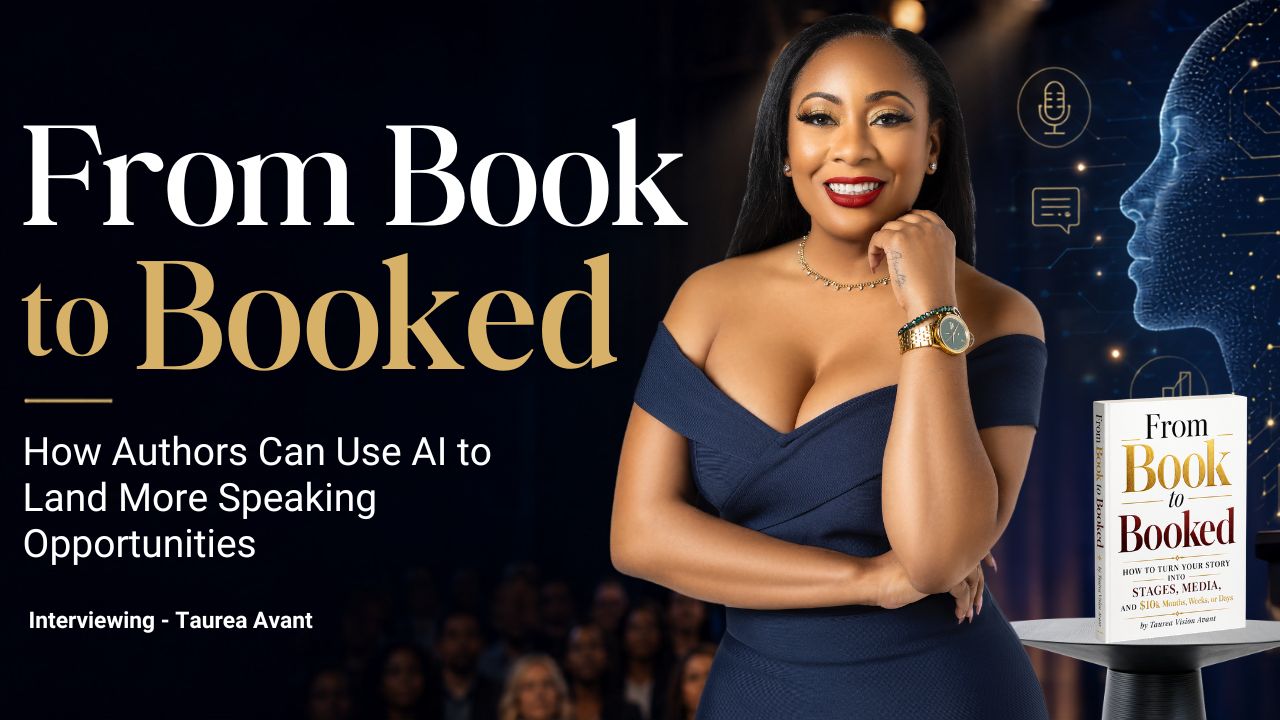
For many authors, publishing a book feels like the finish line. Visibility strategist, international speaker, and bestselling author Taurea Avant sees it differently. In her view, publishing the book is often just the beginning of a much bigger opportunity.
Avant has built her work around helping authors, speakers, coaches, and experts turn their knowledge and stories into visibility, stages, media opportunities, and revenue. Through her “From Book to Booked” approach, she encourages authors to stop looking at their books only as products to sell and start viewing them as strategic business tools.
“Writing the book is not necessarily the hardest part,” Avant explains. “The bigger challenge is figuring out what to do with the book once it is finished. A lot of authors publish the book, put it on Amazon, announce it to their audience, and then they are not really sure what comes next.”
According to Avant, what comes next should be a clear strategy for expanding the message beyond the pages.
A Book Can Become a Speaking Credential
For authors who also want to speak, Avant believes the book can provide an immediate credibility boost. It gives event organizers, podcast hosts, media outlets, and potential clients something tangible that represents the author’s knowledge and expertise.
However, simply being a published author is not enough.
“The goal is not to get on stage and spend 30 or 45 minutes talking about your book,” Avant says. “The goal is to identify the transformation inside the book. What can you teach? What can the audience learn from your story? What problem can your experience help someone solve?”
That shift in thinking can completely change how an author approaches speaking opportunities.
A leadership author, for example, can develop talks around leadership development, team building, workplace culture, or personal growth. An entrepreneur who has written about business can create presentations around sales, marketing, resilience, branding, or entrepreneurship. Someone who has written a personal story can identify the lessons within that experience and turn those lessons into keynote presentations, workshops, or panel topics.
Avant encourages authors to start by looking at something they already have: their table of contents.
“Your chapters can become speaking topics,” she says. “One chapter may become a keynote. Another may become a workshop. Another may become a podcast conversation. Authors sometimes think they need to keep creating completely new content when they may already have months of speaking content sitting inside their book.”
AI Is Changing How Authors Can Position Themselves
The rise of artificial intelligence has created concerns for many writers and authors, especially around originality and the future of publishing. Avant believes authors should pay attention to those concerns, but she also sees tremendous opportunity in using AI as a business and visibility tool.
“AI should not replace your story, your experience, or your voice,” she explains. “But it can help you organize and leverage what you already know much faster.”
For an author looking to expand into speaking, that could mean using AI to brainstorm presentation topics based on a book, strengthen a speaker bio, create podcast pitch ideas, develop workshop outlines, prepare interview talking points, or identify audiences that may benefit from the author’s message.
An author could take the summary of a chapter, for example, and ask an AI tool to suggest five potential keynote topics. From there, the author can decide which ideas fit their expertise, audience, and voice.
“You still have to bring yourself to it,” Avant says. “AI may give you an idea, but your experience is what makes that idea powerful.”
AI can also help authors think more strategically about where their message belongs. Rather than randomly searching for stages, Avant recommends first identifying the audience, the problem that audience faces, and the transformation the speaker provides. AI can then be used to brainstorm types of conferences, organizations, podcasts, associations, and companies where that topic may be relevant.
Visibility Often Leads to More Visibility
One of the biggest lessons Avant teaches speakers is that getting booked can often lead to getting booked again.
Event organizers and podcast hosts regularly research potential guests before making a decision. When they search a speaker’s name, they may look for previous interviews, articles, speaking clips, media coverage, and other evidence that the person has experience delivering their message publicly.
“People are going to look you up,” Avant says. “The question is, what are they going to find?”
This is why she encourages speakers to treat every opportunity as part of a larger visibility strategy. A podcast appearance can become a video clip. A speaking engagement can become photographs, testimonials, and social media content. An article can strengthen credibility when pitching another publication or conference.
Over time, those individual opportunities create what Avant describes as a visibility trail.
“The more evidence people can find that you are already speaking, being interviewed, and sharing your expertise, the easier it becomes for them to imagine you on their stage,” she explains.
That does not mean every opportunity needs to be massive. Avant believes many speakers make the mistake of focusing only on large conferences while overlooking smaller stages that may place them directly in front of the right audience.
“Thirty of the right people can sometimes create a bigger opportunity than 3,000 people who are not your audience,” she says.
Authors Should Think Beyond Book Royalties
Avant also challenges authors to think differently about how a book can generate revenue.
Most authors naturally think first about book sales. Yet the financial opportunity connected to a book can extend much further.
A book may sell for $20, but the authority created by that book can lead to speaking engagements, coaching clients, consulting contracts, partnerships, workshops, media appearances, and other opportunities worth considerably more.
“The book can be one of the least expensive things you offer, but it can be one of the most powerful tools for introducing people to everything else you do,” Avant says.
That is the core of the “From Book to Booked” philosophy. The objective is not simply to sell more books. It is to use the book to create a larger ecosystem around the author’s expertise.
When that happens, the book becomes the introduction, the speaking opportunity expands the message, and the business gives the audience a way to continue working with the author.
The First Step Is Getting Clear
For an author who wants to begin landing more speaking opportunities, Avant recommends starting with clarity.
What do you want to be known for? Who needs your message? What transformation can you provide? What type of stage already attracts those people?
Once those answers become clear, the next step is consistent visibility and pitching.
“The biggest mistake is waiting for someone to discover you,” Avant says. “You have to start putting yourself in the rooms, conversations, interviews, and platforms where your message belongs.”
With the continued growth of podcasts, virtual platforms, live conferences, digital media, and AI tools, authors now have more ways than ever to turn one book into multiple opportunities.
The book may start the conversation, but it does not have to be where the conversation ends.
Learn How to Speak on More Stages
Avant is continuing this conversation through her How to Speak on More Stages Workshop, designed for authors, speakers, coaches, entrepreneurs, and experts who want to increase their visibility and create more speaking opportunities.
The workshop will cover how to position a message for the right stages, develop stronger speaking topics, leverage a book as a credibility tool, identify opportunities, and use AI to help make the visibility process faster and more strategic.
To learn more or register, visit www.HowtoSpeakonMoreStages.com.
-

 Featured2 years ago
20 Entrepreneurs to Watch Closeout 2024
-

 Real Estate2 years ago
Startups Are Looking To Fractionalize Real Estate Assets, But Should They? – Forbes
-

 Innovation2 years ago
Leo Horacio: A Successful Entrepreneur in the Ecommerce and Online Sales Industry
-

 Innovation2 years ago
Innovators in Social-Emotional Learning: Dr. Myava Clark and Chris Clark Jr.
-

 Music2 years ago
Artist Deydee Signs $350,000 Contract with Rueda Empire LLC
-
 Latest2 years ago
Florida Gov DeSantis signs 15-week abortion ban | Latest News
-
 Uncategorized2 years ago
Trailblazer in Business: Alicia Fitts on Building Wealth and Community Through Faith
-

 Latest2 years ago
Charles zhang recognized by forbes as #1 on michigan’s 2022 best in state wealth advisor list